LitRPG
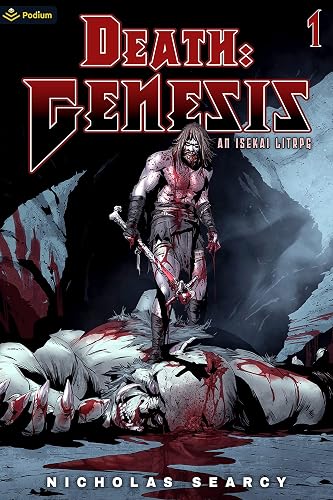
Death: Genesis Review: The Reliable Bruiser That Hits the Same Notes Twelve Times
- Narrator
- Eric Michael Summerer
- Series
- Death: Genesis — Book 1
- Runtime
- 14h 35m
- Tropes
- isekai, dungeon crawler, bruiser MC, bear familiar, party adventure, multi-POV, momentum-based combat, half-demon protagonist, undead party member
- Author cadence
- ☆☆☆☆☆ A/5
- Sub-genre
- LitRPG
- Publisher
- Podium Audio
The thesis up front
Death: Genesis is an isekai LitRPG that does exactly one thing it promises and does it for twelve books without flinching: it puts a large man with a simple weapon in a dungeon and lets him hit things until he gets strong enough to hit bigger things. Zeke Blackwood starts the series as essentially a caveman with a club. By book twelve, he has somewhat better armor, significantly more powerful abilities, and a fancier club. He is not that much different.
That is the honest pitch, and for the right reader, it is a recommendation.
A note on scope: this rating is through book seven. The series has since concluded at twelve volumes. Based on the extraordinary consistency of the first seven books, I'd expect the grade to hold—Searcy shipped twelve books in less than four years, a new installment every four months without fail, and the quality baseline stayed steady throughout. But the later arc territory is unreviewed here, and that's worth knowing.
What this series is
Death: Genesis is standard LitRPG in the classic sense: visible character sheets, explicit stat numbers, ranked abilities, experience points, levels. When Zeke kills something, the system tells you about it. The power fantasy is direct and metered.
The setup is isekai. Zeke Blackwood dies on Earth—he'd been donating a kidney to his sick brother, his baseball career already destroyed by injury, his future already over in the way he'd planned it—and wakes up in the Radiant Isles, a magical world at war between good and evil into which all of resurrected humanity has been conscripted. The god Oberon recruited Zeke specifically; the full shape of why unfolds slowly over the series. What matters in the early going is that Zeke is strong, getting stronger, and has a dire bear cub named Pudge.
Zeke
The reason to try this series is Zeke—not because he's a complex character, but because he's an honest one. Zeke is a bruiser who solves problems with overwhelming physical force, and the series never pretends otherwise. Book one is essentially one long demonstration of this premise: Zeke descends into a cave, kills trolls with a club, and racks up kills until he's powerful enough to move on. Well over half the book takes place in that cave. It goes on for what feels like too long, and it is entirely deliberate. Searcy doesn't want the leveling to feel unearned, so he makes you sit through every kill.
It is a rough opening, but it is also an accurate one. Whatever feelings book one gives you are approximately the feelings the series will continue giving you across eleven more books. Zeke by book seven is the same essential person he was in book one: direct, physical, loyal, not given to brooding about whether to swing the club. He swings the club. His party members make fun of him for it. He swings the club harder.
There is real appeal in this if you are in the mood for it. Zeke does not have the verbal wit of Jason from He Who Fights with Monsters or the tactical creativity of Carl from Dungeon Crawler Carl. What he has is a very clear sense of purpose and a willingness to commit to it without second-guessing. His fights are not that much different in book seven from how they were in book one—his abilities have grown, the enemies have escalated, the stakes have expanded, but the man is the same man. Caveman with a club in book one. Caveman with a fancier club in book seven. The series is better for not pretending that's a problem.
The party
Where the series earns its tier is the supporting cast.
Tucker, the alchemist who joins early and becomes a fixture of the party, has more to him than his role suggests. Talia Nightingale, an undead princess who falls in with Zeke in the first few books, is one of the more interesting takes on the undead companion archetype: she's fighting to preserve her humanity while losing it, and the tension in that is real. Abby Summers, the archer who begins the series as Zeke's love interest and guide to his new world, makes a choice partway through the series that lands, on first encounter, as completely out of character.
It isn't. This is the thing the multi-POV structure does well when it's working: the chapters from Abby's, Tucker's, and Talia's perspectives are laying groundwork for every unexpected turn before Zeke—or the listener—fully understands it. When those choices come, they come because the interior monologue was already there. The author does something truly difficult here: he makes choices you don't expect, and then he earns them in retrospect so cleanly that the surprise doesn't feel cheap. It feels like these characters were always going to do this, and you just weren't watching closely enough to see it coming.
The caveat is that this only works if you don't skip those chapters. If you stay in Zeke's POV and fast-forward through the others, the major turning points in those characters' stories will read as ham-fisted, because you'll have missed the very chapters that justified them. The series asks you to do the work. It pays off when you do.
The multi-POV problem
Here is where the series starts to strain.
By the middle of the run, Zeke is operating alongside Tucker, Abby, and Talia Nightingale—three distinct characters who each get full POV chapters whenever the party separates. Zeke is, clearly and by a significant margin, the most compelling voice in the series. Every chapter from his perspective moves. When the party splits and the story cycles through Tucker's arc, then Talia's arc, then Abby's arc, then back to Zeke, you can find yourself two or three hours of listening from the last Zeke chapter, waiting for the story to come back around. The intervening chapters are not bad. The writing quality is consistent throughout. But the listener knows where the story lives, and spending four or five chapters in other characters' heads creates a low-level impatience that doesn't quite go away until Zeke is back.
The fix is not to skip those chapters—for the reasons already noted. The fix the author didn't take would have been tighter chapter construction: covering two or three characters' situations within the same chapter when the party is separated, rather than giving each a full-length standalone block. As written, the structure taxes patience more than it needs to, and the effect compounds as the series adds characters. It is not a reason to stop listening. It is a reason to accept, going in, that there will be stretches where you are waiting.
Pudge
Pudge, the dire bear cub soul-bonded to Zeke, is thoroughly likable in the early books. There is something directly appealing about a small bear that loves its person completely and will follow him into any danger without hesitation. The loyal-dog personality works when the character is, in fact, a bear.
Partway through the series, Pudge gains a bearkin form: a humanoid body, the ability to speak, and full-length chapters from his point of view. This is where things stop working. The loyal-dog personality that functioned as effective shorthand for an animal companion becomes the entire characterization of a person with a chapter-length inner life, and it has nothing to carry it. A bear that is loyal and simple is sweet. A humanoid character who is loyal and simple and narrates their experience of being loyal and simple at length is a different proposition.
The contrast with The Primal Hunter is instructive. Jake's animal companions—Sandy, Misty, Haiku—have oversized, distinct personalities that work in any form precisely because the personality is the entire point of the character. Pudge as a bearkin is the same Pudge as the bear, which sounds like it should be a virtue and somehow isn't. There's no amplification, no new dimension that the humanoid form reveals. He was a good bear. He is a flat bearkin.
Pudge's solo chapters in the later books are the most skippable content in the series. If you're going to use 1.5x speed anywhere, use it here.
Combat and what wears on you
Zeke's combat system is built around momentum. The longer he fights, the more he charges toward a devastating finishing ability that can turn an unwinnable fight. This creates a recurring structure across the series: Zeke enters a fight against something he probably should not be able to beat, endures the punishment, builds the charge, and unleashes the finisher to pull out the win. His party members make fun of him for it—jumping in, smashing everything, somehow surviving on sheer durability until the momentum crests. It is a fair characterization.
This structure works well in the early books, when it's still establishing itself. By book seven, it has become the default shape of most major combat sequences, and the consistency makes individual fights harder to distinguish from one another. Zeke's abilities grow, his enemies escalate, the stakes expand—but the underlying engine is the same engine, and the fights begin to rhyme with each other in ways that flatten the texture. Some of the dungeon sequences are written well when there's real plot relevance to what Zeke is fighting. Others exist to add levels, and those are the ones where the momentum loop becomes most visible.
This is not a reason to avoid the series. It is a reason to go in knowing that the fights are not the main draw. Your engagement will likely hinge more on how much you like spending time with these characters than on whether each combat sequence offers something new.
The consistency argument
The strongest thing you can say about Death: Genesis is that it is completely, reliably consistent. Book seven feels like book one in all the ways that matter: the tone, the character voice, the pacing, the ratio of dungeon grind to character work to party drama. Whatever the series is doing right or wrong, it does exactly that across twelve books.
Nicholas Searcy shipped those twelve books in less than four years—a new installment every four months, without exception—and kept the quality baseline stable throughout. The early books feel like later books. The series earns its ending with the same energy it established in book one. That consistency is not the exciting thing to say about a series, but in long-form LitRPG, where quality degradation across a fifteen-book run is practically a genre tradition, it is a real achievement.
The practical consequence for listeners: book one is a real test drive. If you enjoy it, you will enjoy every subsequent book at roughly the same level. If you find book one rough and unengaging, the series does not have a dramatic gear-change improvement waiting for you. It deepens, adds new characters, expands the world—but it remains recognizably what it always was. Whether that's good, bad, or indifferent is almost entirely a function of what you wanted from it.
The verdict
B-high. Worth the Credit.
Death: Genesis is a well-executed LitRPG with a no-frills bruiser protagonist, a party cast that has more real depth than its setup implies, and a multi-POV structure that rewards patience and punishes skipping. Book one is rough and candid in roughly equal measure—it tells you exactly what kind of series this is, and it's telling the truth. Every book thereafter delivers more of the same, by design.
Pudge's bearkin arc is the one element that doesn't land, and the multi-POV pacing taxes you more than it needs to. Neither is fatal. Against those, you have Zeke as a reliable, unpretentious protagonist; a party whose unexpected choices are actually earned; and twelve books that released on time and held their quality throughout.
This rating is through book seven. More has since released. Based on everything I saw across those seven books, I don't expect the grade to move.
If you want a series that challenges what LitRPG can be, this is not it. If you want a series that does the genre well—clean dungeon-crawling, a main character who is exactly who he appears to be, and a party that has more going on than the bruiser-and-his-bear setup suggests—Death: Genesis is worth your credit.
Reading order
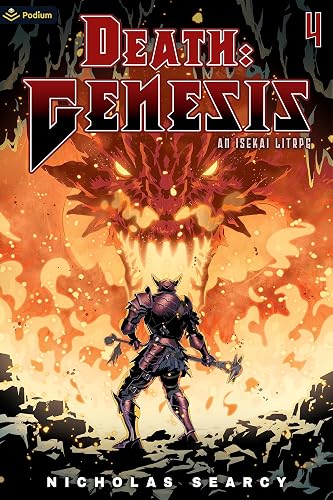
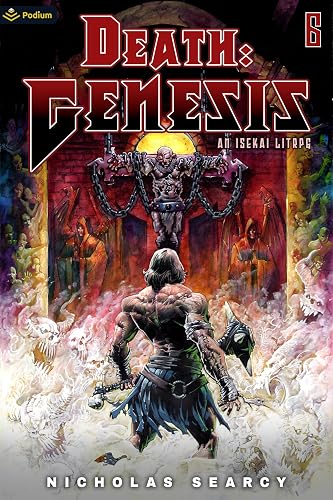
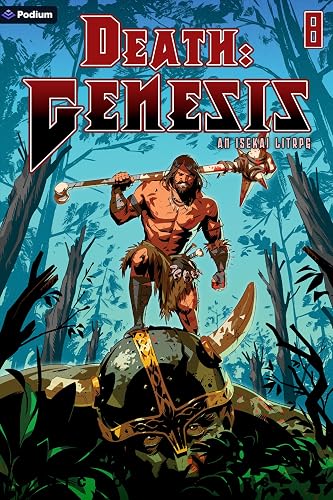
Books in publication order. Cover links go to Audible — affiliate-tagged so you get the book and we get a small cut.
If you liked this, try…
- The Primal Hunter by Zogarth — Jake's animal companions (Sandy, Misty, Haiku) have massive, distinct personalities in any form; Pudge as a bearkin doesn't land the same way, and the gap is instructive.
- He Who Fights with Monsters by Shirtaloon — larger ensemble, sharper comedy, more varied combat variety; Death: Genesis is grimmer in tone and more dungeon-focused.
Content notes
Violence throughout; party member betrayal arc; undead companion themes.
Frequently asked questions
Is book one representative of what the whole series is like?
Should I skip the non-Zeke chapters?
What happened to Pudge?
Is this LitRPG or progression fantasy?
Is the series finished?
Read next
Worth the Credit verdicts (B-tier and above). Scroll the carousel for more.