Epic Fantasy
A Song of Ice and Fire Review: A Gimmick That Worked, a Corner He Wrote Himself Into, and Counting
Why this review exists
A Song of Ice and Fire is outside this site's usual genre, and this review exists anyway, because I've watched George R.R. Martin get canonized as a visionary for twenty years and somebody on the internet should keep the receipts. Credentials first: I read all of these books twenty-plus years ago, working night shifts at a desk job before the internet was worth anything, and I thought he was overrated then, before it was a take. Everything since has only proven the point. I've deliberately never read anyone else's criticism of his work, so if the following retreads famous ground, that's convergent evolution: the flaws are just that visible.
Exhibit A: the stallion that mounts the world
If you've only seen the HBO show, you don't know about the stallion that mounts the world, because the show mercifully cut it. In the books, it is central to the Dothraki: their religion, their prophecy, their identity. Khal Drogo goes on about it. Everyone goes on about it, constantly; do not make a drinking game of it, you will not survive. And it amounts to nothing. Daenerys takes over the khalasar, becomes their new object of worship, and the stallion is simply never relevant again. That's not subverted expectation; that's a writer throwing everything at the wall and quietly abandoning whatever doesn't stick, and the books are full of it.
Exhibit B: he killed everyone, and then had nobody left
The books' casts are enormous, every HBO character is five or six book characters condensed, and I've come to believe the size existed to feed the machine: sprawling families and lineages as ammunition for each book's shock deaths. And look, killing Ned Stark worked. Whether it was planned or Martin discovered how big a pop shock-value murder gets, he leaned into it as the series' signature, and in a tight trilogy, a story where no one is safe could have been something special.
Across a long series, it's self-destruction on layaway. By book five, he'd killed something like 80% of the cast anyone cared about, leaving roughly Jon and Daenerys standing, and the book has to spend its length introducing new characters nobody has any reason to invest in, five books deep, doing book-one work at the point the story should be converging. He wrote himself into a corner, I said so twenty-five years ago, and the two decades without a mainline book since are the confession he'll never make out loud. It's called A Song of Ice and Fire; everyone could see the intended convergence. HBO fumbled the landing catastrophically, that failure is theirs, but they were only holding the bag because the author handed it to them and walked away.
The real offense
Here's what moves this from "flawed series" to the grade below: the dishonesty. Writers write themselves into corners all the time; it's an occupational hazard, and there are honorable exits. Admit it and end the series. Retcon your way out, ham-fisted as that is, fans forgive a clumsy bridge if it gets them more story. Even open the toolbox in public and let people see where it went wrong; that would be fascinating. What you don't get to do, in my book, is spend twenty years telling every interviewer the ending is coming, it's all in hand, and the show got it wrong compared to your version, while producing prequels and side projects and not one mainline page. The fans made this man. Repaying them with two decades of that routine, while banking on them not doing the math, is the most disrespectful author-fan relationship I can name, and it's why my Dungeon Crawler Carl review praises Dinniman's announced ending in the same breath as his books. The contrast is the point.
Verdict
F, and marked abandoned, because that's simply accurate. Some things in these books genuinely work; the Wall material was strong, and the political-soap-opera-plus-fantasy fusion was legitimately different for its era, when the genre's bench was thin. That's what makes the whole thing worse, not better. On this site, Carl sits alone in a tier above S; if I ever build the tier below F, it'll be for this, not because the prose is the worst I've reviewed, but because no author has treated his own readers with less honesty. It's my site. The receipts stay posted.
Reading order
Books in publication order. Cover links go to Amazon, affiliate-tagged, so you get the book and I get a small cut.

A Game of Thrones
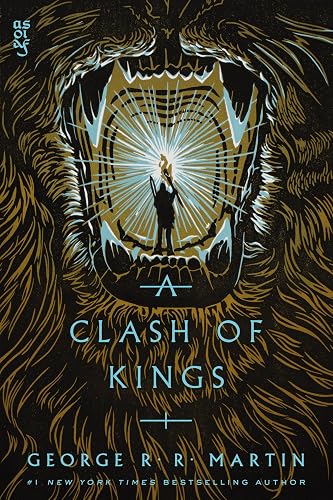
A Clash of Kings

A Storm of Swords

A Feast for Crows

A Dance with Dragons
A Feast for Crows: Kindle release date. This volume was re-issued and the earlier audio edition delisted, so the store now shows only the re-issue (December 15, 2011). The Kindle date is the closest verifiable stand-in and keeps the series in order.
If you liked this, try…
Content notes
Extreme violence including against pregnant women and children. Sexual violence. Torture. This is not incidental; graphic brutality is core to how the series operates.
Frequently asked questions
Why is a traditional epic fantasy series on a LitRPG site?
Isn't A Song of Ice and Fire acclaimed? Hasn't it won awards?
Shouldn't I just watch the HBO show?
Will Martin ever finish the series?
Read next
Worth the Credit verdicts (B-tier and above). Scroll the carousel for more.