Cultivation
Battle Mage Farmer Review: A War-Weary Mage at the End of the World
- Narrator
- Michael Kramer Narration: ★★★★☆ 4/5
- Series
- Battle Mage Farmer — Book 1
- Runtime
- 12 hrs 1 min
- Tropes
- war veteran protagonist, slice of life, farming protagonist, doom points, sapient animals, slow burn romance, reluctant hero, progression fantasy, isekai adjacent, system mechanics
- Sub-genre
- Cultivation
- Publisher
- Recorded Books
What this series is
Battle Mage Farmer opens with a world that has already been broken.
The setup is simple in concept and devastating in execution. Mages are living weapons, not the elegant, controlled magic of most fantasy settings, but battlefield forces that wiped out armies and scorched land so thoroughly that wherever they fought, nothing will grow again. Generations after the war officially ended, the world is in slow collapse. Entire regions can't produce food because the soil is mana-irradiated. Kingdoms that survived the battles are losing the peace because there isn't enough to eat. The damage compounds across years. The world is dying by degrees, and the cause is magic.
John Sutton arrived in this world a decade before the series begins. He became one of the most powerful battle mages alive, fought through years of the war, and was part of ending it. He has killed more people than he can count, across enough time that it has wrung him dry. The system has now given him a discharge, a plot of farmland on the edge of the empire, and what amounts to a receipt for his service. He wants to farm it. He wants to be left alone. He is completely and specifically done.
The catch is his Doom Points. Every use of John's magic inflicts additional damage on the environment around him: more mana radiation, more soil contamination, more harm to a world that cannot afford more damage. The Doom Points are a system counter for this: a numerical representation of how much he's cost the world, ticking toward apocalypse if he can't manage it. He is overwhelmingly powerful. Every time he uses that power, something gets worse. That constraint, enormous capability paired with enormous motivation not to deploy it, is the structural argument that drives the entire series.
The Beware of Chicken comparison
This comparison comes up early, so it's worth making precise.
Beware of Chicken and Battle Mage Farmer are the two primary entries on the "overpowered protagonist who opts out to farm" shelf. Both follow a protagonist who looks at their world's power hierarchy and chooses to walk away from it. Both feature animal companions who become near-sapient and develop real personalities. Both run a slow-burn romance that takes considerable time to resolve. Both alternate between slice-of-life farm chapters and plot-driven sections where the wider world forces itself back in. The recommendation flows in both directions; readers who loved one reliably pick up the other.
The difference is in everything underneath. Jin Rou in Beware of Chicken finds the cultivator world absurd and walks away from it cheerfully. His world is not dying. His farming is enjoyable. The tone is warm and often funny. John Sutton's world is dying. The farming has weight because people are starving and what he grows matters. The war is not background color. It's a burden he carries into every scene, shaping how he moves through the world and what he's willing to do in it. The tone is grim, deliberate, and almost never comic. The cozy chapters carry a different charge because of what's underneath them.
Both series are excellent at what they do. If you want the coziest version of this premise, Beware of Chicken is the natural starting point. If you want higher stakes, a darker world, and a protagonist who is specifically not okay, Battle Mage Farmer is the next read. They're the same shelf with different temperaments.
John Sutton
John is what happens when the "reluctant hero who just wants to farm" archetype gets executed with true character depth.
The personality is Clint Eastwood by way of LitRPG: the retired gunfighter who settled on the frontier, low on tolerance for nonsense, with the specific kind of exhaustion that comes from years of doing something you were very good at and hated. He approaches farming with military precision and retirement with military discipline. He is not unkind but he is contained. He does not perform emotion. When the world arrives at his door, and it always does. He deals with it efficiently and goes back to his fields.
What makes him work is the doom points constraint. John can end most confrontations in seconds. His enemies frequently discover this. But the series is not about whether he can win; it's about whether he can avoid the engagement entirely, and what it costs when he can't. A protagonist who foregoes combat because combat is morally and environmentally costly is more compelling than one who simply fights every battle at full strength. Every decision John makes under threat has weight, because the restraint is not just preference. It's stakes. Each Doom Point he accumulates is a real harm to the world he's trying to save.
The war backstory accumulates gradually. You understand through implication what the years of fighting did to him. By the time the series needs John's past to matter directly, it matters.
The farming matters
Battle Mage Farmer earns the farm chapters by making them structurally necessary.
John doesn't farm because it sounds nice. He farms because people are starving, the world's agricultural capacity has been gutted by mana-irradiated wastelands, and he happens to carry knowledge from modern Earth into a world that doesn't have it. He applies Earth science to farming: techniques, tools, and processes from a completely different technological tradition. One of the early developments in the series is finding a steel mill and beginning to fabricate implements that allow for mass crop production at a scale the local population doesn't have and can't explain. His output is extraordinary in ways he doesn't fully advertise, partly because he doesn't explain himself and partly because the people around him have no frame of reference for what he's doing.
This matters beyond John's personal peace of mind. He is quietly contributing to civilization's food supply in a way that no single mage on a battlefield ever did. The farming is not a contrast to the high stakes. It is a response to them.
His animals feel this too. The farm's ambient mana environment bleeds into his livestock, who become near-sapient over time. John can understand them as clearly as if they're speaking. They are present without becoming the center of the story, more on this below.
The animal cast, handled correctly
Sapient animal companions in LitRPG and progression fantasy appear often. They are also frequently a problem.
Heretical Fishing is the natural comparison the genre offers: a protagonist who just wants to fish or farm, animal companions who develop personalities, a world that keeps interrupting. Heretical Fishing eventually accumulates too large and too active an animal cast, with enough sapient animal POV chapters that the series starts to feel like a collection exercise, drifting toward a Pokémon dynamic without the discipline to stop. The animals start driving scenes they shouldn't be driving.
Battle Mage Farmer stays on the correct side of this line. John's animals are present and endearing. But the series doesn't hand them dramatic POV chapters or make them the emotional center of any arc. They exist at the edge of John's life the way animals on an actual farm exist at the edge of a person's life: attached, occasionally surprising, important, but not steering. The cast size stays manageable. The handling is efficient. It adds warmth without distorting the story's weight.
The roller coaster
The pacing rhythm is worth describing explicitly because it's unusual and it's the thing people either adapt to or don't.
Slow section: John is farming. He's milking cows, making cheese, fabricating metal tools, doing the daily work of a remote mountain holding. The chapters are quiet. Just when you've settled into the rhythm, something arrives: a threat, a mystery, someone from his past, and the plot accelerates. Once the plot has been running fast for a while, you're back on the farm. Chapters of metalwork and crop management. Then the next interruption comes before you've fully settled.
The series never gives you enough of either mode to exhaust you with it. The farm chapters don't drag because the action is always close. The action sequences resolve without becoming their own extended arc because the farm is always waiting. The books end at natural breaking points rather than on cliffhangers, which means each one satisfies as a complete unit while still pulling you toward the next. This is harder to execute than it sounds, and the series does it consistently.
Michael Kramer
Michael Kramer narrates the standard Audible audiobooks (Recorded Books), and the fit is close to exact.
John Sutton is a contained, war-weary veteran, not warm, not cold, but carrying a quality of profound exhaustion that doesn't perform itself. Kramer's voice has a deep gravelliness for John that sits right: it sounds like someone who has been through too much to emote at full register and has settled into something quieter and harder. The voice is characterization, not a narration choice. John sounds like who the series says he is.
Both formats are available on Audible: the standard Kramer version and the Graphic Audio dramatized adaptation with a full cast. If you start with Kramer and develop an attachment to his reading of John, which is likely, transitioning to a different cast involves adjustment. Start with the Kramer version. Compare from there if you're curious about the adaptation.
The verdict
A-high. Beware of Chicken is the entry point to this corner of the genre. Battle Mage Farmer is what you read when you want that same promise — a powerful protagonist who opts out to farm — delivered in a darker register, with higher stakes, a grimmer world, and a protagonist who is specifically carrying weight from the war that made the world what it is.
The doom points system is the best structural argument in its favor: the restraint has a concrete shape, the farming has concrete stakes, and the power fantasy runs in reverse: John's challenge is not to accumulate power but to avoid spending it. That is a more interesting problem than most LitRPG series pose, and the series builds everything around it coherently.
If Beware of Chicken is your entry point to this shelf and you're looking for more, this is the read. If you've already burned through both and want something adjacent, Heretical Fishing has overlapping DNA, with caveats about the animal cast in later books.
Worth the Credit. Start with Book 1 (Domestication). The pace is deliberate from the beginning — give it the first few chapters to establish what kind of story it's running, then watch whether the rhythm works for you. The series is complete at nine books.
Reviewed through Book 3. Series complete at 9 books.
Reading order
Books in publication order. Cover links go to Amazon, affiliate-tagged, so you get the book and we get a small cut.
Domestication: A Fantasy LitRPG Adventure
Germination: A Fantasy LitRPG Adventure
Cultivation: A Fantasy LitRPG Adventure
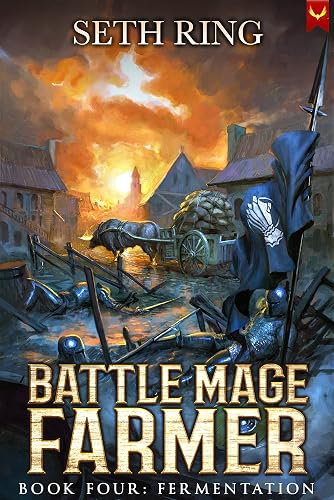
Fermentation: A Fantasy LitRPG Adventure
Transformation: A Fantasy LitRPG Adventure
Preservation: A Fantasy LitRPG Adventure
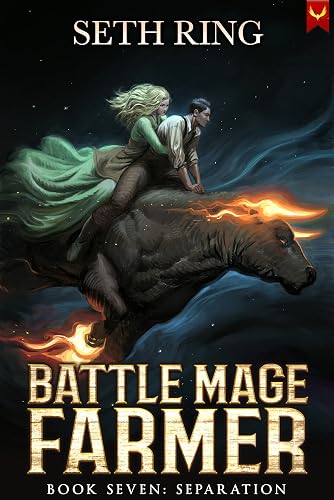
Separation: A Fantasy LitRPG Adventure
Conservation: A Fantasy LitRPG Adventure
Culmination: A Fantasy LitRPG Adventure
If you liked this, try…
- Beware of Chicken (Casualfarmer) — the most direct comparison: both follow an isekai-adjacent protagonist who farms instead of fighting, with sapient animal companions and a slow-burn romance; Beware of Chicken is cozy, funny, and warm — Battle Mage Farmer is darker, grittier, and more serious; same shelf, different temperament
- Heretical Fishing — shares the fishing/farming protagonist who just wants to be left alone and animal companions who develop personalities; Battle Mage Farmer controls its animal cast more efficiently and keeps its stakes heavier throughout
Content notes
Combat violence and wartime atrocity in backstory; mana-irradiated wastelands with mass-casualty scope; a world in slow collapse from starvation. Tone is deliberately darker and more serious than the typical cozy LitRPG.
Frequently asked questions
How does this compare to Beware of Chicken?
Is the magic system interesting if John barely uses it?
Does the farming content get boring?
Should I try the Graphic Audio dramatized adaptation?
Read next
Worth the Credit verdicts (B-tier and above). Scroll the carousel for more.