Isekai

I Got a Cheat Skill in Another World Review: The Missing Scenes Weren't Worth Having

Reviewed Updated 6 min read

The verdict D
Not Worth the Credit Ongoing
Series
I Got a Cheat Skill in Another World and Became Unrivaled in the Real World, Too — Book 1
Runtime
5h 53m
Tropes
isekai, dual-world protagonist, overpowered MC, bullied protagonist, portal fantasy, instant power-up, princess rescue, school life, power fantasy, ongoing series
Sub-genre
Isekai
Publisher
Yen Audio

What this series is

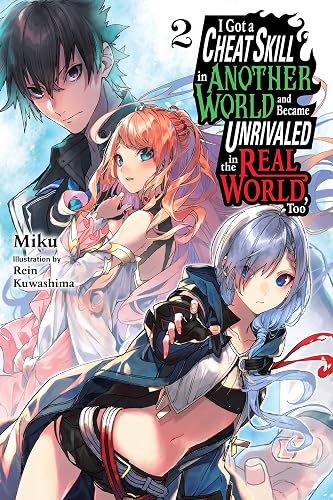
I Got a Cheat Skill in Another World and Became Unrivaled in the Real World, Too originated as a web novel by the Japanese author writing as Miku, adapted into a light novel series published in English by Yen On and an audiobook series by Yen Audio. More visibly, it became an anime — and that anime is where most people, myself included, encountered it first.

The hook: a bullied, overweight high-schooler named Yuuya Tenjou discovers a portal to a fantasy world hidden in the house his late grandfather left him. When he steps through, he finds himself in the abandoned home of a legendary sage: complete with the sage's entire arsenal of mythic weapons, the sage's complete book of spells, and a starting zone that happens to be so dangerous that no one else in the fantasy world can enter it. Within the first several chapters, Yuuya has inherited artifacts and abilities that make him comprehensively, absurdly dominant. There is essentially no effort involved. The portal found him; the sage's house gave him everything.

What sets this apart from the standard isekai template is that Yuuya can go back. A time dilation effect keeps his absences covered, and he walks between worlds at will. In the fantasy world, he hunts monsters in the forbidden forest, saves a princess from assassins, and operates as an utter force of nature that the locals are entirely unequipped to understand. Back in the real world, he returns to high school, transformed. Where he left a short, overweight shut-in who was bullied by everyone around him, he comes back tall, muscular, and possessed of a charisma stat. He's suddenly the best at everything: athletic, striking, effortlessly capable. It's maximum-wattage power fantasy operating in two different genres at once.

The premise in motion

Yuuya is a Mary Sue protagonist without apology, and the series doesn't pretend otherwise. He gets everything immediately because the portal dropped him in the right place. The sage's weapons were already there. The magic was already there. His transformation in the real world follows automatically from his stats. The series doesn't try to build toward this. It just starts there.

What's fun is watching the same character exist across both settings. In the fantasy world, he's a mysterious overpowered stranger that royalty and knights alike struggle to comprehend. Back in the real world, his old clothes don't fit anymore, so he goes to the mall to buy new ones, and people notice him, because his charisma stat now makes him visibly extraordinary even in a shopping center. A modeling agency recruiter spots him. None of this goes anywhere quickly, but the comedy of the situation lands: the same person who couldn't get anyone to look at him before now can't walk through a mall unnoticed, and he's completely oblivious to why.

In classic isekai fashion, there is also a princess being chased through the very forest where Yuuya happens to live. He saves her at the right moment, her guards eventually track him down to express gratitude and recruit his help, and the kingdom storyline unfolds with the predictable beats. It's tropey by design. I went to the anime first, enjoyed it for what it was, and found the dual-world gimmick fun to watch: a concept that hadn't been done in this particular combination before.

The most relevant comparison here is He Who Fights with Monsters, which features a multi-book arc where the protagonist travels back to his home world. That series treats the return seriously: it's a significant character development storyline across multiple volumes, earned rather than built into the premise from chapter one. Cheat Skill doesn't have that weight, and isn't trying to. The back-and-forth is the gimmick, not the destination. For the more substantial version of this concept, He Who Fights with Monsters is the correct recommendation. But notably, Cheat Skill is the first isekai to run both timelines simultaneously as its core mechanic from the start.

Why it seemed worth checking the source

The anime has choppy moments. Certain characters recognize Yuuya when they seem like they shouldn't, because the scene establishing that recognition was apparently cut. Plot threads feel abrupt. Some scenes that were building toward something funny end before they fully land. The experience of watching it is enjoyable, but there are spots where the seams show — moments where you can feel the adaptation compressing something.

That pattern, in my experience with Overlord and Solo Leveling, is what good compression looks like. Both of those series have anime adaptations that abbreviate richer source material. Go to the Overlord books after watching the show and you get more Nazarick, more political texture, more of the NPC depth the anime traded away for pacing. Go to the Solo Leveling books and you get an extended self-discovery period, a fuller secondary cast, the weight the anime optimized away. In both cases, checking the source is worth doing.

Cheat Skill's anime seemed to fit the same pattern. The choppy moments looked like compression scars, and the expectation was that the source material would contain what the anime had cut.

The discovery

It doesn't.

The mall scene is the cleanest illustration. After Yuuya's real-world transformation, his old clothes don't fit — he's gone from short and heavy to tall and athletic, and his hand-me-down wardrobe no longer works. He goes shopping. People at the mall notice him because his charisma stat makes him conspicuous. A modeling agency is doing a shoot nearby; one of their recruiters clocks him. He doesn't realize what's happening. They lose track of him before they can approach.

This scene exists in the source material. The anime cuts it. The reason the anime cuts it is that there is essentially nothing there. It's Yuuya going to the mall, people noticing him, and him not understanding why. The recruiter appearance matters later, when she shows up again and acts as though she recognizes him; in the anime, that moment reads as disconnected because the earlier encounter was cut. When you go to the books expecting the explanation, the explanation is that brief. The scene exists, but there was no depth being conserved. The anime was right to leave it out.

That's the pattern across the source material. The things that feel like continuity gaps in the anime aren't gaps created by cutting substantial content — they're places where the source itself moved too quickly or too thinly, and the anime correctly judged those moments weren't worth rendering. The writing quality is poor across the board: prose that dispatches in three sentences what should have weight, events that land without consequence, world logic that goes unexplained not because the author is building toward a reveal but because it wasn't considered. Miku's work here was a first writing project, self-published, a hobby that happened to find an audience. That origin shows. The anime, through better editing and the advantages of the visual medium, makes the material work better than the source does.

The verdict

D tier. The anime is worth watching if the dual-world conceit sounds appealing to you. Give it two or three episodes — the gimmick either lands quickly or it doesn't. The power fantasy operating across two genres simultaneously has real charm, the transformation from nobody to unstoppably capable is handled with the appropriate absurdity, and there's real fun in watching an isekai protagonist return to high school with a charisma stat.

The audiobooks are not worth your credit. They don't fill in what the anime left confusing. They don't contain the depth the choppy moments implied was there. The missing scenes weren't missing content. They were the anime making better choices with material that didn't have much to offer in the first place.

If the back-and-forth concept appeals to you and you want something that executes it with actual craft, He Who Fights with Monsters has a meaningful multi-book arc involving the MC's return to his home world: serious, character-driven, and worth the investment. For overpowered-MC isekai that works in audiobook form, Solo Leveling is the place to start. For a darker, morally complicated angle, Overlord rewards the time this series doesn't.

Not Worth the Credit. Watch the anime.

Reviewed through early Vol. 1. Audiobook series published by Yen Audio, narrated by Curtis Michael Holland.

Reading order

Books in publication order. Cover links go to Amazon, affiliate-tagged, so you get the book and we get a small cut.

If you liked this, try…

  • He Who Fights with Monsters — the back-and-forth between worlds done with actual craft; the home-world arc is a multi-book storyline that earns its emotional weight
  • Solo Leveling — overpowered-MC isekai in audiobook form that actually works; the power fantasy is in the prose
  • Overlord — dark, morally complex villain-protagonist fantasy; source material meaningfully richer than the anime

Content notes

Action violence throughout. Light romantic elements in a high-school setting. Nothing explicit.

Frequently asked questions

What's the anime like?
Fun, and worth a few episodes to see if the gimmick lands. The animation is solid, the dual-world conceit is novel for isekai, and the power fantasy operates across two settings in ways that are at least amusing. Give it two or three episodes and you'll know quickly whether it's for you.
Is the dual-world concept unique to this series?
For isekai specifically, yes. This is the only series where the protagonist actively travels back and forth between the fantasy world and the real world as the central premise. He Who Fights with Monsters has a significant multi-book arc where the MC returns to his home world, but that's a serious, character-driven storyline rather than the core gimmick. The back-and-forth in Cheat Skill is the whole bit from the start.
Why D tier, same as The Eminence in Shadow?
Same diagnosis, similar quality level. D tier here means the reviewer didn't finish the series and the writing quality was poor, not just mediocre. The anime handles the material better in both cases. The specific mechanism is a little different — Cheat Skill adds a wrinkle where the anime seems to be cutting meaningful content, but checking the source reveals those missing scenes weren't worth including. The books don't contain the depth you were hoping for.
What should I listen to instead?
For the 'protagonist gains power in another world and the story follows their return to normal life,' He Who Fights with Monsters does this with actual craft across a long series: the home-world arc is earned and meaningful. For overpowered-MC isekai in audiobook form, Solo Leveling is the right pick. For a dark, morally complex take on a villain protagonist in a fantasy world, Overlord rewards the time this series doesn't.