Isekai
Overlord Review: The One Where You Root for the Villain, and Then He Massacres a City
- Narrator
- Chris Guerrero
- Series
- Overlord — Book 1
- Runtime
- TODO
- Tropes
- isekai, villain protagonist, overpowered MC, monster cast, dungeon stronghold, stat system, undead protagonist, game mechanics in fantasy world, ongoing series
- Author cadence
- ★★★☆☆ 3/5
- Sub-genre
- Isekai
- Publisher
- Yen Press
What this series is
Overlord begins with an isekai premise — a player transported from a dying MMO into a fantasy world version of the game — and then does something almost no series in the genre attempts: it keeps the protagonist a villain, permanently, without redemption arc, without moral awakening, without any drift toward heroism.
The setup: a guild called Ainz Ooal Gown was once a powerful player faction in a fantasy MMO. At its peak, the guild numbered forty-one members, and together they built Nazarick — the Great Tomb of Nazarick — an enormous dungeon stronghold populated with custom-designed NPCs, each with hand-crafted backstories, unique appearances, and elaborate skill sets. Over the years, as real life pulled people away, the guild shrunk. By the game's shutdown, only one member remains active: a player whose character is a skeleton magic-caster called Momonga.
He stays logged in to the last possible moment, unwilling to leave the place that represents his only real community. When the servers shut down, he doesn't disconnect. He wakes up still in the game — or in something that looks like the game — with the NPCs no longer running on scripted responses but fully conscious, sapient, and regarding him with the reverence of worshippers greeting a god.
Momonga, who takes his guild's name as his own — Ainz Ooal Gown — now has to figure out what happened, where he is, whether anyone else from his world ended up here, and how powerful he actually is relative to this new world's power scale. He doesn't know the answers to any of these questions. He proceeds with extreme caution.
The villain problem
Most stories about characters with enormous power position that power as a burden the protagonist must wield responsibly. Or they give the protagonist a strong moral code that governs how and when they use it. Or — most commonly — they give the protagonist enemies evil enough that the reader never has to think too hard about whether destroying them is justified.
Overlord does none of this. Ainz is the strongest being most of this world has ever encountered, and he uses that strength to conquer. He expands Nazarick's reach not because of ideology or anger but because controlling more territory gives his people access to labor, skills, and resources they lack. He treats the humans who live under his rule well — not out of morality but because satisfied subjects are more productive. When someone meaningfully opposes him, or when destroying something will send a message that saves future confrontations, he destroys it. Villages. Cities. Armies. Whoever is in the way.
Kugane Maruyama made a deliberate choice to write several of the series' harshest scenes specifically to counteract readers rooting for Ainz without thinking about what that means. He gave the opposition perspective time — chapters following characters who aren't villains, who have real lives and relationships, who are simply in the wrong place when Nazarick extends its reach. The purpose is to periodically force the reader to look at what they've been cheering for. It works. You find yourself invested in Ainz's plans and then watch him order an atrocity, and the dissonance is the point.
The skeleton and the removal of morality
One of the more interesting structural choices in the series is what Ainz's undead body does to him emotionally. His character form is a skeleton — the highest tier of undead in the original game — and inhabiting it permanently has a side effect: whenever he feels something strongly (grief, guilt, panic, anything that might alter his decision-making), the world automatically suppresses it. His emotions are reset.
This means Ainz functions without the friction most protagonists use to signal their humanity. He can order an execution and feel nothing about it moments later. He can make a decision he knows is monstrous and not carry the weight of it. When he is occasionally kind — and he is, sometimes — it comes from the residue of the person he was before, the human who cared about his guildmates and saw the NPCs as the closest thing he had to family. But that residue competes with nothing. There is no guilt to push back against his practicality.
The author uses this to ask an unusual question: what does a person look like when the mechanism that produces regret has been turned off, but the capacity for loyalty and love hasn't?
The NPCs are the real cast
The greatest strength of Overlord is not Ainz. It's the beings who surround him.
The Nazarick NPCs — the Floor Guardians, the Pleiades battle maids, the various inhabitants of the tomb — were created by Ainz's former guildmates with elaborate backstories, distinct personalities, and unique visual designs. They are not human, and the series never lets you forget it. Their loyalty to Ainz is absolute, their devotion to Nazarick is total, and their regard for anything outside the tomb ranges from contempt to active hostility. To most of them, non-Nazarick beings are beneath notice — not enemies, just irrelevant at best and amusing obstacles at worst.
This is the single biggest gap between the books and the anime adaptation. On screen, the NPCs are distinctive designs with memorable surface personalities. In the books, they are fully realized characters with rivalries, philosophies, and specific ways of reasoning that make their interactions worth the page count they occupy. What Ainz's followers think about each other, how they manage their loyalties, what they actually want when Ainz isn't watching — all of this is book material that the anime had to compress or cut entirely.
The Floor Guardians
The series has an enormous cast of Nazarick inhabitants, but the Floor Guardians are the stars — each responsible for a section of the tomb, each created by a different guild member, and each reflecting something of their creator's sensibilities. Getting to know them is the real reward of sticking with the books.
Albedo is the Overseer of the Floor Guardians — Ainz's second-in-command, and by most metrics the most dangerous being in the immediate vicinity whenever she's in the room. She appears as a beautiful woman with black wings and horns, and her devotion to Ainz is of a particular intensity that makes the other guardians uncomfortable. There's a reason for this that Ainz doesn't know: in the final minutes before the servers shut down, he edited her character settings as a joke, changing one parameter. The result is someone who was designed to be cold and calculating but is instead absolutely, overwhelmingly in love with him — and who has the political intelligence and ruthless ambition to make that a complicated thing to be around.
Demiurge guards the 7th floor and is the series' most intellectually sophisticated character. A devil in appearance with an unsettling refinement in manner, he is the guardian who shines brightest in the Sacred Kingdom arc — the chapters that represent the series' high point. What makes Demiurge uniquely interesting is one of the best running dynamics in the series: at some point, Ainz says something offhand that Demiurge interprets as a declaration of intent to conquer the entire world. He is not wrong, exactly — Ainz just had no idea he was saying that. Demiurge, convinced he has glimpsed his master's true grand design, immediately begins orchestrating world domination on Ainz's behalf. Albedo joins him. Together they work tirelessly toward a goal Ainz never articulated and cannot now disavow without shattering the illusion that he is the brilliant strategist they believe him to be. So Ainz plays along, reverse-engineering his subordinates' schemes to figure out what his apparent plan is supposed to be. The dramatic irony runs for volumes. It's funnier in summary than it sounds in execution — in the books it's played with complete sincerity — and it says everything about both characters: Demiurge's terrifying competence applied to a misunderstanding, and Ainz perpetually improvising his way through a role he accidentally wrote for himself.
Cocytus is the one Ryan specifically remembered: an enormous insectoid warrior guarding the 5th floor, built from chitin and blades, who speaks in a clipped and deliberate way that reflects his warrior's code. He is the guardian dispatched to subjugate the lizard men in volume 4 — given significant restrictions on what forces he can use, forced to work within constraints, and in the process developing in ways the earlier volumes haven't asked of him. He is the most honorable of the guardians in the classical sense: he has a code, and within his worldview he follows it. The Lizard Man arc is worth the time spent on it specifically because of what it does to Cocytus.
Shalltear Bloodfallen guards the first three floors as a True Vampire — one of the most individually powerful guardians, with a personality that swings between elaborately refined and completely bloodthirsty. Her rivalry with Albedo runs through the series as a source of ongoing tension and, occasionally, bleak humor. She's the guardian most likely to be in the center of a major plot point in the early and middle volumes, and her character design — elegant, unnerving, unmistakably dangerous — is one of the most memorable in the series.
Aura Bella Fiora and Mare Bello Fiore share the 6th floor as twin dark elves, created by the same guild member. Aura is outgoing and controls beasts; Mare is shy and focuses on earth and terrain magic, with a power level that vastly exceeds his demeanor. Their creator designed them with swapped gender presentations — Mare wears a skirt and reads as more feminine, Aura reads as more masculine — and the series treats this as a character detail rather than a joke. They're among the most recognizable faces in both the books and the anime, and their dynamic as twins who are fundamentally different in personality adds texture to every scene they share.
Sebas Tian guards the 9th floor and serves as Ainz's personal butler — the guardian whose visual design (an impeccably dressed elderly gentleman with a dragon's heritage beneath the surface) most clearly represents the contrast between how Nazarick presents itself and what it is. He's also the most morally complicated guardian. Sebas has a compassionate streak that occasionally puts him in tension with Nazarick's standard operating procedure. He is not a good person in any simple sense, but he is the closest thing to one that Nazarick contains, and the series makes that count.
Pandora's Actor, who guards the Treasury rather than a floor, is a special case: he was created by Momonga himself rather than a guildmate. He's theatrical to an almost painful degree, with a flair for dramatic entrances and elaborate presentations that embarrass Ainz every time they interact — because Pandora's Actor reflects exactly what Momonga was like when he was younger and more chuunibyou about everything. He can transform into any member of the Ainz Ooal Gown guild, making him strategically invaluable and personally mortifying.
The Pleiades battle maids round out the regular cast: where the Floor Guardians are overwhelming forces of nature, the Pleiades are Nazarick's rapid-response team, each with a design that reflects a different kind of unsettling. Solution Epsilon — the doppelganger-slime hybrid Ryan mentioned — is simultaneously one of the series' most socially capable characters and one of its most quietly terrifying. Entoma Vasilissa Zeta projects an insect aesthetic that the anime renders in spectacular, creepy detail. Each of the six has enough backstory and personality to anchor their own arc; they don't all get one, but when they do appear, they're worth the attention.
Three formats, one recommendation
The anime — which has run for four seasons and covers the story through approximately volume 14 — does two things exceptionally well: it brings the character designs to life (the Nazarick NPCs, visually, are among the most memorable designs in the genre) and it handles the major battle sequences with genuine skill. What it cannot do in two-to-three volumes per season is give you the inner lives of twenty characters. The show leans into the spectacle, moves fast, and leaves most of the nuance behind.
Books first. The anime is absolutely worth watching, but it's best when you bring the context with you. When characters do things in the anime that seem slightly inexplicable, or when interactions between NPCs feel thin, it's because the relevant backstory was cut. Knowing the material makes the anime feel like the right kind of fast; not knowing it can make character decisions feel arbitrary.
If you've already watched the anime and found Ainz's subordinates somewhat underdeveloped, the books will fix that impression significantly.
The pacing problems
Overlord has real structural issues that get harder to overlook as the series extends.
Theory crafting. Ainz is a tactician who thinks in game mechanics, and the series gives his inner monologue extensive room to play out theories about how skills and spells translate from the game to reality — what level thresholds unlock, what evolution paths look like, how different ability types interact. In small doses, this gives the magic system a distinctive texture the genre rarely earns. In large doses, which the later volumes sometimes reach, it becomes exhausting. Long stretches of theorycrafting that turns out to be irrelevant — because Ainz is a level-100 existence in a world where the ancient power ceiling is in the high 70s — waste the pages they occupy.
Drawn-out fights. Ainz and his subordinates spend most of the series deliberately limiting what they reveal of Nazarick's capabilities. This is initially a sensible precaution — Ainz has no idea what the power ceiling in the new world is and wants to probe it carefully. By volume 15 or 16, the justification for the same behavior has worn thin. Fights that could end in a single spell get extended across multiple chapters of deliberately restrained combat, and the restraint no longer feels like interesting tension; it feels like the author running out the clock. The pattern repeats often enough in the later books that you can feel it coming.
Uneven page economy. The Lizard Man arc (volume 4) is the clearest example of a recurring problem: the author dedicates substantial space to building out characters — their culture, their personalities, their history, their particular way of seeing the world — who are then subjugated and become background figures. The setup detail put into the lizard man tribal leaders, their inter-tribal dynamics, the individual warrior whose perspective carries much of the volume, exceeds what those characters ultimately warrant. Once they're incorporated under Nazarick, their culture doesn't persist in any meaningful way. A quarter of a volume could have achieved the same story goal; an entire volume was used instead.
This isn't an isolated problem. Several character arcs in the later volumes receive significant buildup — chapters establishing their skills, their motivations, their internal conflicts — before resolving in ways that make the buildup feel misallocated. Sometimes this is intentional: Ainz views most people in the world as temporary instruments, and the series is honest about the fact that the reader's investment in them is usually higher than his. But honest doesn't mean satisfying, and the pattern creates genuine frustration when it happens with characters the author spent real time developing.
The high points
The Sacred Kingdom arc (volumes 12–13) is the series at its best. It's the most focused two-volume stretch in the series — character-driven, emotionally engaging, with a specific conflict that brings out interesting dimensions of Ainz that the surrounding volumes don't reach. If the rest of the series ran at this level, the tier would be different.
The middle volumes (roughly 5 through 11) represent the series' strongest sustained stretch. Ainz and Nazarick begin exerting power more openly, the secondary cast gets meaningful screen time, and the world beyond Nazarick becomes worth mapping in its own right. These are the volumes where the villain protagonist premise delivers most consistently.
The Enri Emmot subplot — the farm girl who receives a discarded goblin-summoning horn that turns out to be enormously powerful by this world's standards — is a gentle tonal counterpoint to everything happening at Nazarick's level. Some readers find it charming; others find the pacing cost (several chapters per volume) more than it's worth. It's worth knowing it exists before you hit it.
The late-book disappointments
The Half Elf Demigod arc (volumes 15–16) is the weakest in the series. The pattern of Ainz theorycrafting about power is at its most exhausting here; none of it materially affects the outcome. Several character threads that received substantial buildup over many prior volumes resolve in ways that range from unsatisfying to perfunctory. The fights are drawn out for reasons that by this point in the series no longer feel fresh. And the overall payoff for two volumes of setup lands significantly below what the buildup warranted.
The series isn't finished as of this review. There are more volumes coming. Whether the author recovers the pacing and character economy of the stronger middle stretch — or whether the late-book tendencies continue — will determine whether this ends as an A-low or adjusts in either direction.
Who this is for
Overlord is for readers who want something the genre almost never provides: a story where the main character is the villain, stays the villain, and the series takes that seriously rather than softening it.
It's also for readers who want a richly designed monster cast — characters who don't think or behave like humans in monster costumes, with specific and creative designs that the anime adaptation faithfully renders.
It is not for readers who need a protagonist with a moral center, or who will find extended theorycrafting interesting regardless of whether it affects the plot. And the later volumes require patience for pacing that the earlier volumes don't ask of you.
The translation roughness is present but less pronounced than in Solo Leveling — word reuse and some prose flatness are noticeable, but not to the degree that they interrupt the reading experience. Worth being aware of rather than a significant barrier.
The verdict
A-low. Overlord does something rare in this genre: it commits fully to a villain protagonist and takes the moral implications seriously, without softening Ainz or building toward a change of heart. The Nazarick NPCs are among the most creatively realized secondary casts in any translated series in this space. The Sacred Kingdom arc is exceptional.
The pacing problems are real, the later volumes have genuine weaknesses, and the theory-crafting habit becomes a tax on reader patience as the series extends. These hold it below the S tiers despite its uniqueness.
Worth the Credit. Start with volumes 1–3, get through the Lizard Man arc knowing it's the slowest stretch, and trust that the series finds its footing in volumes 5–11. The Sacred Kingdom arc alone justifies the investment.
Reviewed through volume 16 (The Half Elf God-kin, Part 2). Series ongoing. Anime Seasons 1–4 available — covers through approximately volume 14.
Reading order
Books in publication order. Cover links go to Audible — affiliate-tagged so you get the book and we get a small cut.
The Undead King
The Dark Warrior
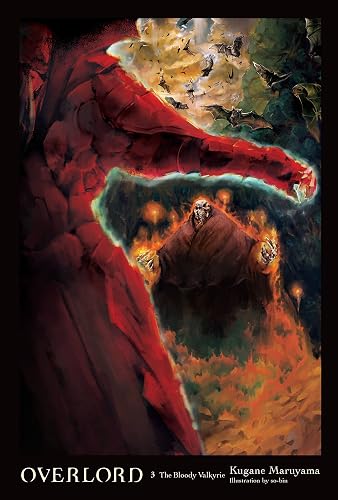
The Bloody Valkyrie
The Lizard Man Heroes
The Men in the Kingdom (Part 1)
The Men in the Kingdom (Part 2)
The Invaders of the Large Tomb
The Two Leaders
The Magic Caster of Destroy
The Ruler of Conspiracy
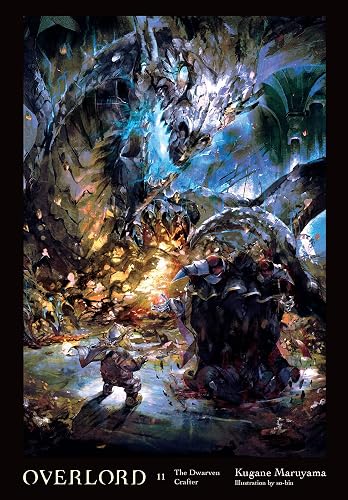
The Craftsman of Dwarf
The Paladin of the Sacred Kingdom (Part 1)
The Paladin of the Sacred Kingdom (Part 2)
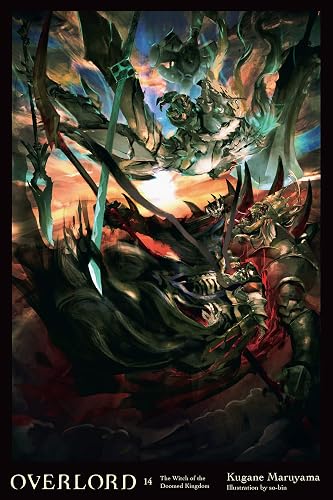
The Witch of the Doomed Kingdom
The Half Elf God-kin (Part 1)
The Half Elf God-kin (Part 2)
If you liked this, try…
- Solo Leveling (Chugong) — similarly translated East Asian series with an overpowered protagonist; Solo Leveling stays cleaner on pacing and never meanders, making it the easier recommendation for newcomers
Content notes
Violence against civilians throughout, including mass executions ordered by the protagonist. Torture. Non-human characters with monstrous worldviews the story takes seriously. This is not a redemption arc.
Frequently asked questions
Is Overlord LitRPG?
Is Ainz the bad guy?
Do I need to watch the anime or read the books?
What's the deal with the skeleton and emotions?
When does the series get good, and when does it lose the thread?
Read next
Worth the Credit verdicts (B-tier and above). Scroll the carousel for more.