Progression Fantasy

Immortal Great Souls Review: The Best Progression Fantasy Series You'll Almost Quit in Book 2

Reviewed Updated 9 min read

The verdict S-low
Worth the Credit Ongoing
Narrator
Nick Podehl
Series
Immortal Great Souls — Book 1
Runtime
38h 23m
Tropes
reincarnation, cultivation, core-based power system, academy training, lost memories, ensemble cast, nature vs nurture, red-listed protagonist, ongoing war, underworld setting
Author cadence
☆☆☆☆☆ C/5
Publisher
Podium Audio

What this series is

Immortal Great Souls is built on one of the more distinctive premises in modern progression fantasy. The setting is not a conventional fantasy world: a group of warriors called Great Souls traveled through a portal long ago to fight the demons of a hellish demon realm, and they never made it back. Centuries later, the effort to get home continues — but the Great Souls who die in that fight don't stay dead. Their souls cycle into a great pyre, a structure that stores them between deaths and eventually returns them to the living world. Every time they come back, they come back at zero. Cultivation reset. Memories gone. Body adult, but power nonexistent.

To manage this, a training institution — the Academy — has been built around the pyre. When a Great Soul is reborn, the Academy receives them, trains them back toward their prior power levels, and eventually deploys them back into the war. It is less a school and more a military pipeline with academic trappings: everyone is an adult, everyone knows they'll die again, and the purpose of everything is to get them back into fighting shape fast enough to matter. The Academy is staffed by legendary instructors, organized by a leadership hierarchy that has been in place long enough to calcify into something resembling a ruling class, and presided over by a soul-storage mechanic that nobody seems to fully understand — including those in charge. Who comes back, when, and how frequently appears to be outside anyone's control.

This reincarnation loop is what makes the series tick. The Great Souls are not imprisoned, exactly, but they are effectively stranded — fighting a war in a realm they were never meant to call home, trying to push back enough to find the door out. The personal and political tensions that have developed over centuries of this arrangement form the backdrop against which Scorio's story unfolds.

Scorio and the Abhorred

Scorio is the protagonist and a Great Soul who hasn't reincarnated many times — which is notable, because in the logic of this world, frequent reincarnation means more chances to regain power, more accumulated experience across lives, more standing within the Academy's hierarchy. Scorio starts Book 1 at a structural disadvantage before the story even begins.

What makes his situation more complicated is the title he carries: the Abhorred. In a world where Great Souls write journals to their future selves — messages from one life to the next, since each rebirth strips away memory — Scorio's journals appear to have been destroyed. He arrives in his current life with no letters from himself, no guidance, and a designation that marks him as an enemy of the Academy's leadership. Whatever his past lives did to earn that label, he has no access to the record.

The story unspools his history gradually. In certain trials and visions, Scorio catches glimpses of who he was and what choices he made, and he starts to piece together a picture that doesn't quite match what the Red Lister designation implies. Something else is going on — something beyond the moral charges that branded him an enemy of the current order — and Tucker is deliberate about how slowly that picture comes into focus. The Abhorred is one of those rare protagonist names that feels earned rather than arbitrary: it tells you exactly how the world sees him, and the gap between that reputation and the person you're following is one of the story's primary engines.

The power system

Immortal Great Souls is not LitRPG. There are no stat blocks, no skill notifications, no "+1 to Strength" moments. The power progression here is core-based, closer in design to Cradle or The Beginning After the End than to anything with visible leveling mechanics. A practitioner's core is the source and measure of their power — the reservoir that determines what they can do and how they compare to the people around them. Ranks have names and the gaps between them are clearly defined: you always understand what someone at a given rank can do, what they can't do, and how large the gulf is between tiers.

This is one of the things Tucker does well at a structural level: the power hierarchy is legible from the ground up. You never lose track of what's at stake in a confrontation because you've lost the thread of the power scaling. When Scorio develops abilities that fall outside the standard rank framework — which happens, and it's handled well — the divergence is meaningful precisely because the baseline is so clearly established. You know what normal looks like, which makes the deviation land.

The combat and cultivation sequences are well-balanced. Tucker isn't grinding you through training montages for their own sake. The power system exists to serve the story rather than the other way around.

What Tucker does right

The writing quality in Immortal Great Souls is a cut above most of the genre. Tucker brings a level of polish — in prose, in pacing, in character construction — that shows up consistently across the series and marks the work as seriously crafted rather than produced to fill a series slot.

The character work is the standout. The supporting cast is strong across the board: specific personalities, clear motivations, histories that feel coherent with how they behave in the present. The Academy setting gives Tucker a reason to put a large ensemble through shared crucible experiences — the training, the trials, the politics of rank — and he uses that pressure well. Friendships form. Rivalries develop into something more complicated. Characters who start as obstacles become allies; others who seemed like allies reveal themselves to be something else. The relationships have texture.

The most interesting character choice Tucker makes is in how he handles reincarnation across multiple lives. In most stories, a character who "resets" retains their core identity — the rebirth is a plot device, not a true transformation. Tucker does something harder. Because Great Souls return without memories, and because who returns when appears to be effectively random, some characters who reappear over the course of the series come back changed. Not cosmetically changed — fundamentally different people, shaped by the circumstances and relationships of their most recent life rather than the continuity of their prior self.

This is a difficult choice for a writer to make. You spend time establishing a character, getting readers invested in their voice and their relationships, and then the story effectively says that version of them is gone. The character who comes back is technically the same soul but practically a different person. Tucker makes this choice deliberately, and it works as thematic statement: you are not just your history, especially a history you can't access. Who you become depends as much on where you land as on who you were. It's an interesting, somewhat unusual approach to reincarnation mechanics, and it adds weight to the soul-cycling that a more conventional treatment would have flattened.

Book 1: Bastion

Bastion is an excellent first entry and holds up on its own. Scorio arrives at the Academy under the worst possible circumstances: no journals, Red Lister status, and the institutional hostility that comes with it. What follows is a long training arc — longer than Ryan would prefer, and that's a fair critique — but Tucker fills it with enough character development, relationship building, and actual conflict that the length doesn't feel like padding. You're not watching characters grind through pushups. You're watching a group of people with complicated histories and competing interests figure out what they mean to each other under pressure.

The specific nature of Scorio's power, and how it develops differently from his classmates, keeps the progression sequences interesting rather than mechanical. He doesn't have a cheat power that makes everything easy. He has something more unusual: a power set that requires him to engage with the world in unconventional ways, which becomes both an advantage and a liability. Book 1 ends with Scorio's strong showing at the Academy's evaluation — a climax that earns its punch because the training arc built the stakes for it through character rather than stat readouts.

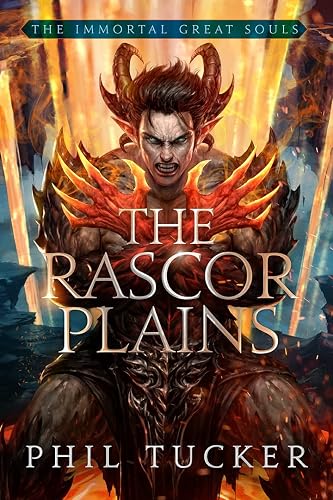
Book 2: The Rascor Plains — and the problem

This is the book that will make or break the series for you, and the decision comes in the first half.

The training arc in Book 1 — the unconventional approach that allowed Scorio to excel — turns out to have been structurally costly. Book 2 opens with the revelation that what he built was built wrong, and a significant portion of the runtime is dedicated to dismantling it. He spends what amounts to the first half of The Rascor Plains undoing everything he did in Bastion.

To be clear about what this means in practice: you have just spent 38 hours watching Scorio claw his way from nothing to something meaningful. You are excited. The wider world is finally opening up. The grand questions about his past and the Academy's secrets are starting to feel answerable. And then the story hits the brakes and sends him backward.

Character regression arcs are a true failure of craft when they're done for no reason other than to inflate the progression curve — to manufacture another training sequence, to get the protagonist another power-up opportunity. They are a cardinal sin of the genre, and Book 2 commits it with full commitment. If this were an A-tier series, it would have been the end. I would have put it down. The only reason I kept going was that the series had already demonstrated it was operating at a level that made the frustration survivable.

And the maddening thing about how Tucker executes the regression is that you can't skip it. During all those scenes of Scorio breaking rocks and undoing his foundation, Tucker is doing extensive work on the supporting cast. Alliances form. Friendships fracture. People who were rivals start developing grudging respect. People who were allies reveal complications. The relationship landscape that exists at the end of Book 2 is meaningfully different from where it was at the end of Book 1, and that shift is built entirely during the regression period. Skip the rocks and you'll lose the context for everything that follows.

The practical recommendation: when you hit the rock-breaking section, bump your playback speed to 1.25x. You'll catch all the dialogue and relationship beats — the stuff that actually matters — without suffering through every swing at full pace.

Once you clear the halfway mark of Book 2, something shifts. Scorio has enough foundation, enough power, enough reputation to start interacting with the world in ways that move the plot rather than just stall it. The political landscape of the Rascor Plains opens up, the larger mystery about what's really driving the Academy and the war starts to sharpen, and the series remembers how to move. The second half of Book 2 is good. Not as good as Book 1 at its best, but good enough to remind you why you started.

Book 3 and beyond

LastRock is where the series repays the patience Book 2 demanded. Once the regression arc is behind you and Scorio has enough standing to meaningfully engage with the larger world — with the people who want to use him, the factions trying to recruit or destroy him — the story becomes excellent. Book 3 doesn't regress. It doesn't retread. It builds on everything that came before and rewards the investment.

The series stands at four books as of mid-2026. Ryan has not yet read The Lost Cube, released May 26, 2026. The current rating reflects Books 1 through 3. There is real reason to expect The Lost Cube could move the series from S-low into S-mid — the trajectory from LastRock earned that optimism. This review will be updated once Ryan finishes Book 4.

The verdict

S-low. Immortal Great Souls is one of the better progression fantasy series currently running — a fully realized world, an elite cast, serious craft at the sentence and structure level, and a power system that handles cultivation elegantly without devolving into stat crunching. Phil Tucker is a strong writer and this series shows him at or near his best.

The caveat is Book 2, and it's a real one. The regression arc is difficult, and if you go in unprepared for it, it can feel like the series is imploding just as it should be expanding. It isn't. It recovers. But it asks you to get through a rough stretch on faith, and not everyone is going to extend that.

If you trust the series enough to push through — and the 1.25x tip helps — what's on the other side is worth it.

Worth the Credit. Start with Bastion, buckle down in the first half of The Rascor Plains, and let Book 3 remind you why you stayed.

Reviewed through LastRock (Book 3). The Lost Cube (Book 4, released May 2026) unread at time of writing. Rating and verdict subject to update.

Reading order

Books in publication order. Cover links go to Audible — affiliate-tagged so you get the book and we get a small cut.

If you liked this, try…

  • Cradle (Will Wight) — the closest analogue in power system design: core-based cultivation, named ranks with clear capability gaps, no stat menus. Similar craft level and pacing discipline.
  • The Beginning After the End (TurtleMe) — another core-based system where a practitioner's power derives from their core rather than leveled skills. Similar feel for the progression curve.

Content notes

Combat violence throughout. Book 2 contains an extended character regression arc that some listeners find deeply frustrating — see the review and FAQ below.

Frequently asked questions

Is Immortal Great Souls LitRPG?
No. It's progression fantasy. There are no stat blocks, skill menus, or level-up notifications. Characters grow through cultivation — specifically through strengthening their core, the internal reservoir that defines their power. The rank system has clearly named tiers with legible capability gaps between them, similar to Cradle's sacred arts realms. If you came here looking for visible system crunch, this isn't that. If you like progression fantasy that measures power through cultivation mechanics rather than spreadsheet stats, this is exactly that.
Is Book 2 worth pushing through?
Yes — but it earns that answer with an asterisk. The first half of Book 2 (The Rascor Plains) is the hardest stretch of the entire series: Scorio spends much of it undoing the gains from Book 1, breaking rocks, and grinding through a regression arc while Tucker packs the scenes with character and relationship development that you cannot skip without losing context for everything that follows. The practical tip: if you get to the rock-breaking section, bump your playback speed to 1.25x. You'll still catch all the dialogue and relationship beats — alliances formed, friendships strained, rivalries evolving — without grinding through every hammer swing at normal speed. Once you're past the halfway point of Book 2, the story doesn't look back.
How slow is the release schedule?
Variable, but the honest answer is: slower than you'd like. Audiobook gaps have ranged from about 10 months (Rascor Plains to LastRock) to 22 months (LastRock to The Lost Cube), with an average around 17 months between installments. Phil Tucker also runs multiple other projects simultaneously, which affects the pace. Ryan pegged it at 'roughly two years per book' in his notes — that's slightly generous to the first gap and accurate to the most recent one. If you're starting now, all four books are available, so the wait only applies after The Lost Cube.
Should I wait until the full series is done before starting?
No — and practically speaking, you can't, since there are four books currently out with no confirmed completion date. The series currently sits at S-low, with Ryan expecting it to push into S-mid once he finishes The Lost Cube. What's already here is more than worth the credit. Start with Bastion and let the series earn your patience.
What's the regression arc, exactly, and why is it so frustrating?
In Book 1, Scorio builds his power through unconventional training methods — outside the Academy's standard curriculum — that allow him to punch above his weight at the climax. Book 2 reveals there was a structural cost to that approach, and a significant portion of the book is spent dismantling those gains before rebuilding. It's a textbook character regression arc: the protagonist loses the power they spent the previous book earning, then has to earn it back plus more. Ryan calls it a cardinal sin of the genre. The reason it's survivable here is that Tucker uses the regression period to build out the supporting cast, shift relationships, and establish the political landscape of the wider world. You can't skip it. But you can speed through the duller parts.