Isekai
Rise of the Cheat Potion Maker Review: Strong Early Books, Then a Nosedive After the Wedding
- Narrator
- Matt Hicks, Allie Piper
- Series
- Rise of the Cheat Potion Maker — Book 1
- Runtime
- 11 hrs 13 min
- Tropes
- isekai, reluctant hero, crafting/alchemy, slice of life elements, mature protagonist, harem adjacent, master-apprentice, shop owner
- Sub-genre
- Isekai
- Publisher
- Royal Guard Publishing
What this series is
Nate is an ordinary person from Earth — older than the typical LitRPG protagonist, with a more adult perspective on things — who gets isekai'd into a world with LitRPG mechanics, stat sheets, and a hierarchy of cultivators ranging from baseline human to functionally godlike. The system running this world has a problem: it's been searching for a hero to rally the nation against a major threat named Ares the Peace Spawner, and Nate is apparently the candidate it has in mind.
Nate wants nothing to do with it. He discovers early on that he has a real interest in alchemy, finds a village to settle in, and sets up a potion shop. His goal is a quiet life. The "cheat" in the title refers to his potions — they function as literal exploits in the system, giving him abilities and advantages the normal rules don't account for. He is, in practical terms, extremely powerful. He just doesn't want to be a hero. He wants to make potions.
For the first four books, the tension between what Nate wants and what the world keeps throwing at him drives a story that keeps you engaged.
The early books
Books one through four — through the wedding arc in Peace Spawner — are a fast-paced, frequently fun isekai LitRPG with a refreshingly mature protagonist. The world-building gets set up quickly. Nate's potion-making premise clicks into place efficiently. The cheat-potion mechanic works — it's a clever inversion of the usual LitRPG power fantasy where stats alone determine outcomes, and watching Nate solve problems through clever potion combinations rather than raw levels has real appeal.
The supporting cast is decent. The main relationship — Nate's growing attachment to his fiancée and the group that forms around him — functions well enough to give the plot stakes. The pace is good. Chapters move. Plot happens. The books are fun.
There are problems even in this stretch, but they're easy to overlook when everything else is working.
The power-scaling problem
The world has explicit power rankings — realms or levels that describe how characters stack up against each other. The Lord Ruler sits at the top of the national hierarchy, with other characters positioned relative to him. This structure is laid out clearly and revisited regularly.
The problem is that the author doesn't always honor it. Characters described at a certain rank sometimes perform dramatically above or below what that rank implies when actual combat happens. The LitRPG elements and the combat feel like they're running on slightly different systems — one explicit and numerical, the other operating more on narrative logic. Characters who should be dominant struggle unexpectedly; characters who should be outmatched don't.
This reads like the magic system was invented as the story went rather than designed ahead of time. The author keeps adding layers — Nate's hidden class abilities, his growing list of skills, Daos granted by the world — without locking down the scope. Nate gets the Dragon of Creation Dao, one of the rarest and most powerful in the world, which can let him create essentially anything. His apprentices get equally absurd Daos, apparently because of their connection to him. There's no coherent explanation for why any of them are receiving this kind of world-level favoritism beyond the world wanting Nate to be its hero and him keeping to opt out.
It's the kind of thing you can mostly set aside when the story is moving fast enough. Once the pace slows down, it starts to show.
The apprentice problem
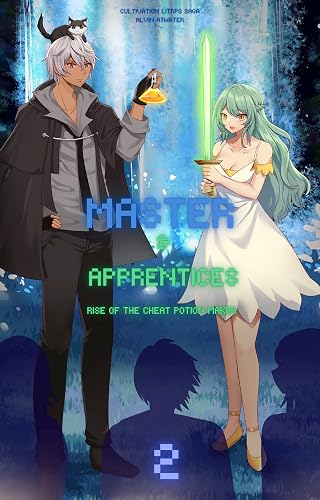
Nate takes on apprentices. One apprentice is fine. Two is manageable. By the time there are three or four, a meaningful portion of every book is devoted to walking through their training — watching each apprentice work through an inferior version of Nate's own abilities, building toward competence he already demonstrated books ago. A book centered on the apprentices specifically is one of the lower points in the early run.
In a proper slice-of-life story, this would be expected. In a story built around fast plot progression and escalating stakes, it's dead weight. The more apprentices the story accumulates, the more time it takes from the parts that work.
The obstinate protagonist problem
The mechanical issue with Nate's premise sits at the character level. He is a man who nearly dies — and nearly watches everyone he loves die — on a recurring basis. Each time, he survives because he managed to find the right combination of potions, abilities, and last-minute power-ups to pull through. And after each near-death, he declines the world's offers to make him stronger, because he just wants to run his potion shop.
Once or twice, this is a character trait. Done repeatedly across six books, it becomes a logic problem. The character has been through enough catastrophic danger that the reasonable response — for any adult with people he cares about — would be to take the power-up. His refusal stops feeling like personality and starts feeling like a narrative contrivance to keep him from solving the larger plot, because the author isn't ready to go there yet. It's not unforgivable, but it accumulates.
The building device
Starting around book 4, Nate gains access to an artifact that functions like a city-builder interface — he can add structures to his farm and property, upgrade existing ones, unlock new tools and chambers and amenities. It's a worldbuilding flex as much as a power-up; his land is already magical, and this becomes a way for visitors to marvel at whatever shiny new addition he's installed this book.
In text, the artifact's menu lists everything available: every category, every option within the category, its cost, its description, including all the options Nate can't afford and never will be able to afford, right alongside the ones he might actually purchase. Every time Nate consults the artifact, the entire list is read through.
In a print or ebook format, this is probably a skim. In audio, it is five to seven minutes of recitation. The same five to seven minutes, repeated, multiple times per chapter, multiple times per book, in every book from four onward. There is no new information. The list doesn't change. The descriptions don't change. By books 5 and 6, this is an hours-per-book tax on the listening experience, and there is no way to consume the later audiobooks without a fast-forward habit.
After the wedding
Book 4 — Peace Spawner — resolves Nate's wedding arc and functions as a natural endpoint. It wraps the major open threads. It lands the emotional beats the early run has been building toward. After it, the story is structurally adrift.
The problem is that the main plot — the world needs a hero to face Ares the Peace Spawner — is still open. Nate has opted out. So the books after the wedding follow a man who is not engaging with the only remaining story that has actual stakes. What fills the space is slice-of-life content in a series that was never optimized for slice-of-life: potion making, apprentice training, dungeon diving with no particular consequence, visiting other cities. Nothing that matters.
It's possible the author is building toward a forced confrontation — that eventually, like the local politics that kept finding Nate in the early books, the world will drag him into the main plot whether he wants it or not. That's presumably where the series is going. But the books after Peace Spawner don't move toward it at a pace that rewards continued listening.
The verdict
C-mid tier overall. That grade reflects the series as a whole. The early books — one through Peace Spawner — are B-mid, and that assessment holds up. They're fast, fun, and the cheat-potion mechanic makes the power-fantasy elements feel inventive rather than rote. The mature protagonist is a welcome change from the genre default.
The back half earns the demotion. Power-scaling inconsistencies that were easy to overlook in a moving story become prominent when the story stops moving. The building-device audiobook problem makes the later volumes borderline unlistenable. The obstinate protagonist premise, charming for the first few books, calcifies into contrivance.
Not Worth the Credit at current standing — but worth the specific caveat that books one through Peace Spawner (Book 4) are worth the credits you spend on them if the premise appeals to you. Stop there. Do not continue.
If what you're looking for is the premise this series is reaching for — powerful protagonist who wants nothing to do with the world's drama, builds something quiet while shenanigans find him anyway — read Beware of Chicken instead. Same energy. Better execution across every dimension. That review is coming next.
Reviewed through book 6 (The Old Family). Book 7 (End of King) has not been read. Stopped two books past the wedding arc that closed in Peace Spawner.
Reading order
Books in publication order. Cover links go to Audible — affiliate-tagged so you get the book and we get a small cut.
If you liked this, try…
- Beware of Chicken — same reluctant-powerful-protagonist-who-just-wants-to-be-left-alone energy, but executed better across the board; if Rise of the Cheat Potion Maker appeals to you, Beware of Chicken is the superior version of the same premise
Content notes
Combat violence. Recurring near-death sequences for protagonist and supporting cast.
Frequently asked questions
Where exactly should I stop?
Is it really that bad after the wedding?
What's the deal with the building device in later books?
Is this comparable to Beware of Chicken?
Read next
Worth the Credit verdicts (B-tier and above). Scroll the carousel for more.