LitRPG
The Grand Game Review (Through Book 5): The Rogue Done Right
I've hinted at this review a couple of times on this site, most recently while explaining why another rogue bored me, so let's finally do it. The Grand Game is the series that showed me what the genre's most common class looks like when an author actually commits to it.
Scope note first: I'm through Book 5, Wolf in the Void, of what's now a ten-book series. I thought I'd preordered Book 6; I hadn't, and the series fell off my radar while the author kept publishing. That's a review of my attention span, not the books, and the silver lining is the stack now waiting.
A rogue who can't just stab his way out
Every LitRPG rogue has the same kit: sneak, hide, backstab. Michael has those, but what he actually runs on is the half of the rogue sheet everyone else ignores: charm and disguise, bolted to a high-charisma build in a world where he's surrounded by enemies he cannot beat in a fight. Book 1 drops him, past life hidden, into the territory of Erebus, a god whose followers kill anyone whose class threatens the established order, and the only way out is through: bluffing past guards, charming informants, dressing as the kind of person his mark would obey, and leaving as few bodies as possible because one discovered corpse puts the whole territory on alert. It's the closest the genre has come to giving me a fantasy con-artist story, and the early books run on that Metal Gear logic of the kill being the failure state.
The reason it works where every other charm ability breaks a story: Elliot nerfed it properly. Michael's charm has limited daily uses, a real failure rate, and only works on targets around his level, so he plans for it to fail, layers it with disguise and staging to improve the odds, and still gets caught out. The tension stays honest because the tools have real limits.
Victories you can itemize
Here's my standing complaint with this genre: the several-books-in protagonist who picks a fight he demonstrably cannot win, and survives because a god intervenes, a core cracks open, or the plot blinks. It's the unearned rescue, and it's everywhere. The Grand Game is the cleanest counterexample I've found. When Michael takes down something that outclasses him, it's because he lured it into chosen terrain he'd already trapped, debuffed it, poisoned it, dragged a wandering monster into the fight, and turned its allies against it, and it still barely works. No luck, no rescues, no plot armor. The wins feel earned because you watched him assemble every piece.
It scratches an itch I've had since The Gentleman Bastards, the great fantasy-heist series that's gone unfinished for over a decade (a wound I've written about before in a certain other review about a certain other unfinished series). Nothing since has delivered that Ocean's Eleven-in-fantasy feeling like Michael's early-book cons.
The honest evolution warning
Now the caveat that cost it a sub-rank: the thing I loved most is a phase. Once Michael escapes Erebus's territory, his combat abilities grow, and the series transitions toward more traditional LitRPG: still tactical, still earned, still consistently well written, but the nearly non-combat con-artist recedes as direct confrontation becomes viable. That's the right call for the story, and Michael the planner stays Michael the planner. I just missed the disguises. If you come for the early-book flavor, know it evolves; if you prefer traditional progression, know it's waiting for you a few books in.
The world helps everything: a genuinely low-powered setting where even strong characters stay mortal, which keeps alliances, tactics, and preparation meaningful in a way most power-scaled series can't sustain. Andrew Tell's narration holds tension well through the long cons.
Verdict
Worth the credit. A-high, with a flagged asterisk: this was a coin flip with A-peak, and I'm only halfway through what now exists. Understated fanfare, a fanbase that quietly loves it, and the best answer I've heard to the genre's laziest class. If your favorite part of a heist movie is the plan barely surviving contact, start Book 1 tonight. And if you're a rogue-story person who bounced off a certain serviceable dragon-rider ranger, this is what commitment to the class looks like.
Reading order
Books in publication order. Cover links go to Amazon, affiliate-tagged, so you get the book and I get a small cut.

The Grand Game

Way of the Wolf
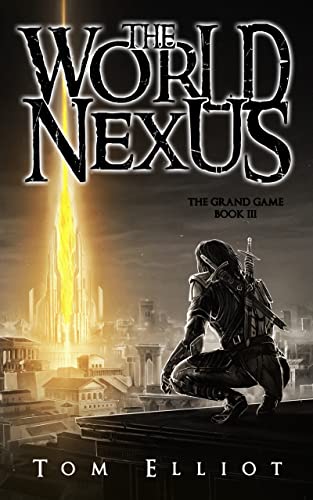
The World Nexus

House Wolf

Wolf in the Void

A Scion's Duty

Ancient Debts

The Lost Reclaimed

Dreams of Power
Wolf in the Void: the audiobooks in this series were produced out of sequence, so this volume reached audio before an earlier one did. The dates shown are the real release dates, not an error in the list.
If you liked this, try…
- King's Dark Tidings — the other series that proves execution beats novelty; Rezkin is the overpowered end of the assassin spectrum, Michael is the underpowered end, and both work for the same reason: the author commits
- The Path of Ascension — the neighboring A-high: cleaner large-scale structure, but Michael's earned, scraped-out victories are the exact thing PoA's steady competence never quite delivers
- Archemi Online — the counterexample: a standard rogue-adjacent class played standard; read these two back to back to see why the class isn't the problem, the commitment is
Content notes
Genre-standard violence with assassinations played tactically rather than graphically. Nothing extreme flagged through Book 5.
Frequently asked questions
Is Michael overpowered?
Why A-high and not A-peak?
How many Grand Game books are there?
What's the world setup?
Read next
Worth the Credit verdicts (B-tier and above). Scroll the carousel for more.