LitRPG
Divine Apostasy Review: The Series Its Own Book One Hides
Every so often I go looking for the series I have recommended most often in conversation and least often seen anyone else bring up. Divine Apostasy wins that by a wide margin. Twelve books, a devoted following, a new-release bump every time A. F. Kay ships, and then silence again until the next one. For a series this consistent, that is strange.
I think the explanation is sitting in book one, and I think the people who complain about it are right.
The entry point is the worst thing in the series
Shade's First Rule has to do the least rewarding work in the whole run. It carries Ruwen Starfield's origin, it carries a sixteen-year-old behaving like a sixteen-year-old, and it carries a world that has to be explained before it can be enjoyed. The supporting cast that becomes the best thing about these books does not really arrive until the back half.
Go and read the loudest reviews on book one and you will find people saying the lead reads as foolish rather than clever, and that too many of his questions get waved off by characters who know better. Those complaints are specific, they recur, and they are not unfair. I am not going to tell you the critics invented them.
I will also be straight about my own position: it has been a while since I listened to book one, and my sense of it is softened by how much I have loved the eleven books since. When broad reader feedback says the opening is rougher than I remember, the honest move is to assume the crowd is closer to right than my fondness is.
Here is the thing, though. I have been in this exact situation before, with a series this site rates higher than almost anything else.
I bounced off Lindon's origin in Cradle. Did not enjoy it at all, and Cradle is an S-peak here and my number-two recommendation on the whole site. The shape is identical: a first book that is doing setup rather than delivering, an audience that samples it and leaves, and a series behind it that is nothing like the thing they sampled. Cradle sits in my underrated list for exactly this reason. Divine Apostasy has the same problem and less name recognition to survive it.
If that pattern cost Cradle readers, it is certainly costing this one readers.
What the series turns into
The best argument for Divine Apostasy is Ruwen and Sift.
Their friendship is the most convincing two-hander I have run into in the genre, and the closest comparison I can give you is Eric and Rugrat from The Ten Realms. Same energy: two people who are entirely in each other's corner, who wind each other up constantly, and whose conversations wander off into nonsense and back again the way real friendships do. It is very funny and it never feels performed.
That relationship is also the clearest evidence for my point about book one, because you barely get it there. It develops. Every subsequent book deepens it, and the same is true of the wider cast. Characters you assume are scenery come back. Rigid people have their worldview taken apart slowly enough that you watch every step. By book eight you are getting interactions that carry a decade of accumulated weight, and none of that is available to someone sampling the first three hours.
The other thing Kay does well is make unimpressive abilities matter. Ruwen keeps acquiring skills that sound like nothing, and then uses them in ways the description never suggested. It is a much harder trick than handing the lead an obviously strong power, and it pays off repeatedly.
Crunch without the bookkeeping
The system sits in a spot I wish more series aimed for. There are levels, classes, titles, and a body-fortification track that genuinely gates what fights you can survive early on. You feel it when something ranks up.
What you do not get is the hour of spreadsheet maintenance after every major victory. Nothing here approaches Defiance of the Fall for density, and nothing here does the thing Unbound does where a big win is followed by upgrades for the protagonist and then upgrades for everyone he knows. Kay keeps the sheet long enough to be satisfying and short enough to stay out of the way.
The series also repeatedly sets up what looks like a regression arc, where someone loses progress and you brace for the grind back, and then declines to write one. Usually the answer is that accumulated knowledge lets them skip the long way around, which doubles as a payoff for worldbuilding you absorbed ten books earlier.
The naming convention, which took me too long to notice
Book one is Shade's First Rule. Book two is The Second Betrayal. Book six is The Sixth Rune. Book twelve is The Twelfth Conclave. Each title names the thing that book turns on, and you generally only understand which thing that was after you have finished it.
I did not spot this until several books in, at which point I felt slow. There is also a side story, Hamma's Last Prayer, sitting at book 6.5, which is the likely source of any confusion about whether the count is twelve or thirteen. Twelve main entries, one extra.
Practical listening notes
Travis Baldree narrates, which for this site is close to a shortcut. He handles Sift's needling and Ruwen's earnestness as clearly different people, and the banter that carries the series lands because of it. Anyone who came here through Cradle, The Beginning After the End, or The Primal Hunter already knows the voice.
Eleven hours for book one, with later entries running considerably longer.
One structural note worth having: a recent foreword indicates the wider multiverse material appearing in the late books is groundwork for a follow-up series, and that Divine Apostasy itself will end when the apocalypse plot Ruwen has been chasing since book one resolves. If that holds, this is a series with a planned finish rather than an open-ended serial, which is worth a great deal when you are deciding whether to start twelve books.
Where it lands
S-mid, and I want to be precise about the ceiling. There is nothing wrong with this series. Across twelve books I cannot point at a filler entry, a pointless side quest, or a character who exists to fill a scene, and that is rare enough to be worth the tier on its own. Every book adds something.
What holds it below the top of the band is that its high notes, while excellent, do not quite reach the highest moments of Primal Hunter, He Who Fights with Monsters, or Defiance of the Fall. The finales are strong. They are a step below the best finales in the genre. That is a narrow complaint, and the last few books have built momentum hard enough that a couple more like them plus a landing could move it.
Verdict
Worth the Credit, with one condition attached: start it knowing book one is the weakest thing in it.
The complaints about the opening are legitimate and I am not asking you to pretend otherwise. I am telling you that the series on the other side of it is one of the most consistent in LitRPG, that Ruwen and Sift are worth the entry fee by themselves, and that the reason nobody talks about this series is that too many people met it at its worst and left.
The reading-order guide has the full twelve-book table with runtimes, plus where the 6.5 side story slots in.
If you have finished The Beginning After the End and want something with more explicit LitRPG machinery and the same absence of bad books, this is the one.
Reading order
Books in publication order. Cover links go to Amazon, affiliate-tagged, so you get the book and I get a small cut.

Shade's First Rule

The Second Betrayal

Uru's Third Temple

The Fourth Secret

Legion's Fifth Vault

The Sixth Rune

Hamma's Last Prayer

Shadow's Seventh Step
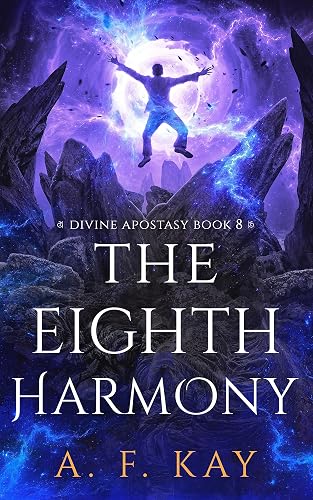
The Eighth Harmony

Tarot's Ninth Harbinger

The Tenth Muse

Zealot's Eleventh Crusade
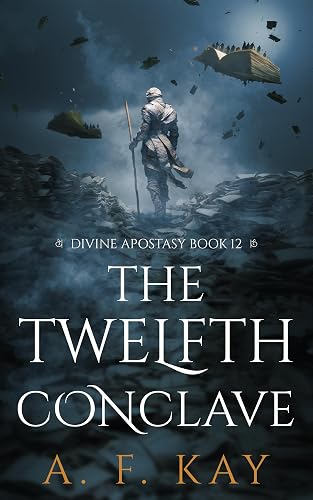
The Twelfth Conclave
Content notes
Combat violence and on-page character death, including deaths of people close to the protagonist. Repeated death-and-resurrection as a core mechanic, with real penalties attached. Nothing sexual; the tone stays close to upper-YA throughout.
Frequently asked questions
Where does Divine Apostasy rank on this site?
Is book one worth pushing through?
How crunchy is the system?
Where does Hamma's Last Prayer fit?
Is the series finished?
Read next
Worth the Credit verdicts (B-tier and above). Scroll the carousel for more.