LitRPG
Welcome to the Multiverse Review: The Buffet Problem

Book 10 broke my streak. Through nine books, Welcome to the Multiverse was one of the most reliable series on my ongoing shelf: fun, fast, always moving forward. Then Exploration arrived, and for the first time in the entire run I skipped a chapter because I heard we were still on the same dungeon floor and realized I didn't care. So this review is two things at once: a recommendation for a series I've consistently enjoyed, and an honest accounting of the book that just knocked its grade down.
The buffet
Silas Renner is a regular guy from modern-day Earth who gets pulled into the forerunner trials: before the system arrives and the apocalypse starts, a handful of humans are competing in system events off-world, earning points that determine Earth's placement when the multiverse formally comes calling. Most of the planet has no idea any of this is happening. Silas also becomes a system architect early on, an ability so rare that every peak faction in the multiverse takes an interest in him.
If you've been around this genre, you just recognized about four series in that paragraph. The Earth arc and the apocalypse-by-system-integration are straight out of the Defiance of the Fall playbook. The absurdly rare ability that puts the protagonist on every cosmic power's radar is Jake's bloodline from The Primal Hunter wearing a different hat. And that's the honest pitch for this series: it's a buffet. A bit of everything you liked from the major series, retold in Sean Oswald's own voice, with his own sense of humor, woven into a story that is cohesive and fun. Silas comes from our Earth, so the books are a little tongue in cheek about their own genre, full of references and inside jokes for people who have read too much LitRPG. I am people who have read too much LitRPG. It works on me.
To be clear about where I stand on the borrowing: imitation really is flattery, and Oswald retells the popular beats in his own way rather than tracing them. There's a big difference between this and pulling a Kaz Hunter, where you photocopy Solo Leveling and change the font. The buffet is a legitimate way to build a series.
The catch is the same one every buffet has: nothing on the plate is as deep as the restaurant that specializes in it. You don't go to a buffet when you're in the mood for steak. The faction politics here run through three peak powers, one clearly on top, and never approach the layered scheming of Primal Hunter, let alone the sprawl of Defiance of the Fall. If any single element is the thing you read for, the source series does it better. If you want a bit of everything in one likable package, that's exactly what this is, and it's why this is Oswald's most popular series.
The shared-multiverse trick
Here's the thing this series does that almost nothing else in the genre attempts. Oswald gave each of his book series its own system, and Welcome to the Multiverse is where those systems collide. When Silas travels, he lands in worlds from Oswald's other books, and their characters cross into this story with their native mechanics intact. The closest thing I've seen to it is the later books of System Universe, and that comparison only underlines how rare the trick is.
When it works, it's a delight. The main character of his Crystal Core series, a cultivator named Ryan (the character; site management remains uninvolved), crosses over with several of his peak-cultivator wives, and watching a completed series' protagonist walk into a different system was my favorite recurring thread in the back half of the run. Crystal Core is a complete five-book cultivation story I'll review down the road, tighter and faster-paced than this series, and the crossover is handled exactly right: Ryan gets enough screen time to register even if you've never met him, his supporting cast stays supporting, and nobody makes you sit through their training montage. Nico, the dragon at the center of Oswald's Dragon Sorcerer books, wanders through too, small enough a part that not knowing his series cost me nothing.
Book 10 is what happens when the trick misfires, and it misfires by inverting everything that made the Ryan crossover work.
The first bad one
Books one through nine are the Earth arc: survival, integration, and the long fight to keep the planet independent through deals with corporations, gods, and multiverse powers, with real intrigue building among the forerunners the whole way. Book 9 ends with Silas ripped across the multiverse into a Fey-ruled system, and book 10 collapses under its own setup.
The structure is a grind sandwich with almost no sandwich. Silas and his companions, Selena among them, arrive as strangers, ingratiate themselves with the local adventurers, and then the book hands them a Fey prince named Tad with a supporting cast of eight or ten, all of them dramatically weaker than Silas's crew. So Silas power-levels them. For chapters. Then his own party grinds their advancement. Then an endless dungeon tests Silas solo across multiple floors. Then his bloated character sheet gets consolidated, ability by ability, because he's approaching the jump to the ascended tiers and the housekeeping apparently couldn't wait. Add the local guildmaster, a gnome artificer from an alternate Earth, and the rest of the cast, and you're listening to a grind fest of fourteen or fifteen characters that eats more than half the book.
And here's the confirmation that stings: I guessed while listening that these strangers came from Oswald books I hadn't read, and I was right. Tad is the lead of his Magic Eater series (that's the Amazon page, if book 10 sold you on him harder than it sold me, or you just want the summary). Jay, the protagonist of Descend (written under Oswald's David Burke pen name), has been a recurring presence in this series for a while, and he's handled the same way Ryan and Nico are: you know he's a powerhouse from the moment you meet him, his banter hints at the story he came from, and none of his scenes need that backstory to matter or to push this one forward. He guides Silas when he can, and he works without homework. Even Violet Violence*, the gnome artificer from an alternate Earth and the best of book 10's new faces, turns out to be from Oswald's Shaman's Call series. And if her name is what I think it is, it's the best joke in the book: an alternate-Earth gnome named for Violet Sorrengail, whose nickname in Rebecca Yarros's Fourth Wing is Violence. So the crossover trick I praised a section ago is exactly what's happening here, and the trick itself isn't the problem: Ryan, Nico, and Jay all prove it works. Tad's crowd is where it fails. They got half a book of my time and gave back none of it. Ten books into this series, what I wanted was Silas shaking up a new system, and what I got was him running a leveling service for another series' cast.
One writing tic became unmissable along the way: this is the book where someone is always tightening formation. The enemy is a military order, so every time Silas overwhelms them, they tighten formation; every long dungeon fight, somebody tightens formation. Once you hear it, you cannot stop hearing it. And a note on names while I'm down here in the details: Silas's mentor is Samveck Raiden* of Clan Raiden*, and those asterisks are doing real work, because I could not confirm the spelling anywhere in print. I'm not alone; the forums are full of people asking for a character guide to this series. So I built one: the series guide carries a spoiler-safe who's who, asterisks and all.
The frustrating part is that the villain deserved better. The Lawgiver, the divinity whose forces rule this world, is a legitimately interesting take on a pure order concept corrupted by its own strictness, and the final battle is good. The opening setup is good. Everything between them is skippable, and I mean that literally: if you're plot-driven, run the dungeon chapters at 1.25 or 1.5 speed and you'll lose almost nothing that matters.
Big numbers, small meaning
This series does big numbers, Defiance of the Fall style: top-tier skills range from 1,000 to 2,000, and you're with them from level one. My standing complaint applies. When an ability ticks from 926 to 945, nothing in the story changes; Silas never fails a heist because he has an 846 in lockpicking and needed an 865. The incremental gains exist because LitRPG contracts require them, and at these magnitudes they're noise.
Credit where due, though: Oswald handles the noise better than most of the crunchy tier. He's active in the community, he visibly responds to feedback, and his post-combat rundowns stay tight, nothing like the Unbound experience of Felix winning a major fight and then spending most of an hour rearranging his skill drawer. Even the book 10 sheet consolidation is the right long-term call; I just wanted it summarized in two chapters instead of performed at full length.
Verdict
Worth the Credit. A-mid. Through nine books this was an A-high series, and on a good day I'd have listened to a peak argument. But grades have to price in consistency, and sitting next to something like The Path of Ascension, which has never produced a bad book, the first genuine dud in the run costs Welcome to the Multiverse a band. The series is still an easy recommendation: a fun, cohesive, generously stocked buffet with the genre's most prolific author behind it and Travis Baldree in front of it. And recovery may already be scheduled. Book 11, Unchained, is on preorder for September, and it sends Silas to Ryan's homeworld, which is the exact crossover this series does best. If it lands, the grade conversation reopens. I'll be there either way.
* Names marked with an asterisk are audio-only spellings I could not verify in print; I've guessed from how Travis Baldree says them. If you know the official spelling, the About page has contact details.
Reading order
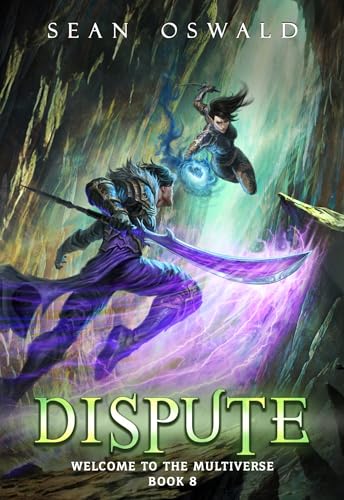
Books in publication order. Cover links go to Amazon, affiliate-tagged, so you get the book and I get a small cut.




If you liked this, try…
- Defiance of the Fall — the S-high this series borrows its Earth arc and its big numbers from; if the crunch itself is what you want, go to the source and accept the density
- The Primal Hunter — the S-high faction-politics comparison; Silas's system-architect rarity works like Jake's bloodline for attracting multiverse attention, but the politics here run three factions deep instead of a dozen
- The Path of Ascension — the A-high neighbor this series sat beside until book 10; PoA has never had a bad book, and consistency is exactly what separates the two grades
Content notes
Genre-standard apocalypse violence and system-integration stakes. Nothing extreme flagged across ten audiobooks.
Frequently asked questions
Who narrates Welcome to the Multiverse?
Do I need to read Sean Oswald's other series first?
Why A-mid instead of A-high?
How many Welcome to the Multiverse books are there?
Read next
Worth the Credit verdicts (B-tier and above). Scroll the carousel for more.