Cultivation / Progression Fantasy
The Path of Ascension Review (Through Book 8): A-Mid Cultivation Done Right — But Push Through Book 2
- Narrator
- J. S. Arquin Narration: ★★★★☆ 4/5
- Series
- The Path of Ascension — Book 1
- Sub-genre
- Cultivation / Progression Fantasy
- Publisher
- Aethon Audio
- Tropes
- western xianxia, cultivation, rift diving, ensemble cast, underdog protagonist, OP-hidden-talent
The push-through-Book-2 warning, up top
The most actionable thing I can tell you about this series is this: Book 2 is the weakest entry, by a wide margin, and most readers who quit the series quit during Book 2. Don't be one of them.
Book 1 is excellent — pacing, character introductions, the world's setup, Matt's origin story — all tight, all earned. Then Book 2 spends most of its runtime info-dumping about how the world's progression system works, how cultivation and rift mechanics interlock, what the realm hierarchy looks like, who's positioned where in the broader power structure. The author is doing necessary world-building work for what's now a ten-plus-book series, but the execution is "telling rather than showing" across stretches long enough that I almost stopped reading. I noticed I was bored. I almost bailed.
Then Book 3 starts and the series is back at Book 1's level of execution — pacing tight, plot moving, characters developing, world-building integrated into action rather than lectured at the reader. Books 3 through 8 (where I am now) sustain that level consistently. Book 2 is a recoverable misstep in an otherwise excellent series, and it's the one place between you and the rest of the run.
If you're 30-40% into Book 2 and considering quitting: push through. The series rewards it. That advice is the single most useful thing this review can give you.
What the series does
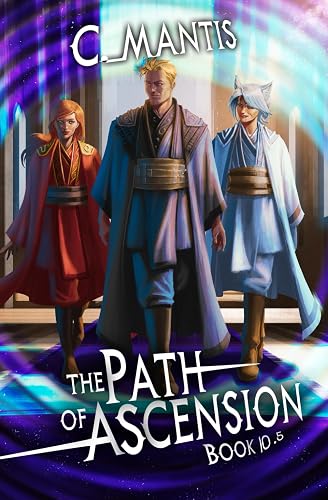
The Path of Ascension is a Western Xianxia-inspired progression-fantasy series with LitRPG elements — a cultivation system where ascenders climb through tiers of power, with the in-series equivalent of dungeon diving (called "rift diving" — the rifts are the source of the monsters that destroyed Matt's home city) as the core progression mechanic. The protagonist Matt's Tier 1 talent is rated as detrimental at the surface level, no guild or group will take him, and the early arc is the underdog hook executed cleanly: the talent isn't broken-as-in-useless, it's broken-as-in-game-changing once Matt figures out what it actually does.
The core cast — Matt, Liz, Aster — is what carries the series past its premise. Each character is distinct, well-developed, and has interpersonal dynamics with the others that produce actual interaction rather than ensemble-prop dialogue. Their power sets are differentiated. Their decision-making is consistent with who they've been written as. The series is one of the cleaner examples in the genre of an ensemble progression read — most of the field defaults to a solo or paired protagonist, and a series where three or four core characters all carry actual screen time without one of them feeling like a third wheel is rarer than it sounds.
What works
The writing is consistently good. Sentence-level craft holds across what's now ten main books. Conversations feel real — characters have actual back-and-forth, with positioning and history showing through the dialogue rather than being announced. Characters never make illogical choices to serve the plot; the plot finds shapes the characters' decisions would naturally produce.
The cast is the strength. Matt, Liz, and Aster are all well-developed and likable. Their power sets are interesting. Their interpersonal dynamics generate friction and warmth in roughly equal measure. The broader supporting cast — other ascenders, mentors, rivals — is similarly textured. There are no functional-only characters here; everyone on screen has at least the outline of an interior life.
The world's progression hierarchy is handled well. The series does the rare thing in cultivation/progression fiction of giving you a real sense of where the protagonist sits relative to the broader power structure. You know what Tier Matt is at. You know what Tier the most powerful figures around him are at. You know what the gap means in practical terms. The comparison work — how Matt and Liz and Aster stand relative to other ascenders, both in their generation and across the broader catalogue of established figures — is one of the most consistently-textured worldbuilding elements in the series.
Value per credit is exceptional. Every book is long, content-dense, and consistent in quality. Across what's now ten main books and a novella, you are getting an enormous amount of runtime — and the consistency between entries means the per-credit math stays favorable across the full run. This isn't a series whose later books thin out; it's a series whose later books reward the credits you've already spent.
Book 1 specifically nails the opening. Matt's origin story hits the required beats without overstaying its welcome. The economy of the setup is one of the cleanest in the genre — every chapter does at least one piece of plot work plus at least one piece of character work, and the book closes its arc cleanly while opening the series.
Book 3 onward holds the line. After the Book 2 stumble, pacing returns to the Book 1 level and stays there. The plot continues moving in every book. Character development compounds. The series doesn't rest at a level — it keeps building.
What didn't work
Three things, two of which I'm clearly labeling as preference rather than quality judgment.
Book 2 is the structural problem covered above — and it's the only objective execution-quality call in this section.
More rift diving than I personally prefer. Some books spend more time on rift/dungeon and training sequences than I weight as ideal for my own taste. This is the same preference I've been increasingly explicit about across recent reviews — at this point in my LitRPG reading I weight story-per-page heavily over granular progression sequences. Path of Ascension doesn't have the filler-grinding problem some of the catalogue's lower-tier entries have — the rift sequences here do real plot and character work — but the quantity of rift content across the series is higher than I'd choose, and readers who specifically love dungeon-driven progression will read this as a strength where I read it as neutral.
The tone is consistently serious. Very little humor. No comic interludes, no recurring gag dynamic between core cast members, no scene-stealing comedic supporting character. The series isn't trying to be funny, and the seriousness isn't a flaw — but the genre's top tier (DCC, HWFWM, Cradle, Skill-Grinder) all find ways to land a quip or a comic beat even when they're not comedies, and Path of Ascension doesn't have that texture. It costs the series something — not enough to lower the tier, but enough to be worth mentioning.
The A-mid ceiling
The structural reason this series lands at A-mid rather than A-peak — and the most useful thing I can say about it for readers calibrating against the catalogue — is that Path of Ascension doesn't have a scene-stealing breakout character.
The genre's strongest series have one. Primal Hunter has the Malefic Viper — a supporting character so compelling that readers report continuing past Book 1 partly to see what the Viper does next. He Who Fights with Monsters has Jason Asano — a protagonist with such a distinct, polarizing personality that he defines the series; love him or hate him, he is unforgettable, and the love-or-hate divide itself is part of what makes the series a phenomenon. Cradle has Lindon at the protagonist level and Yerin and Eithan and a long list of supporting characters who steal scenes outright; the cast's character density is one of the four or five things that put Cradle in the S-tier conversation.
Matt is not that. He is likable, well-written, believable, logical. You would want to spend time with him. You would, as the cliché goes, have a beer with him. But he is — and this is meant as honest editorial framing rather than as a put-down — a standard good guy. He doesn't have the larger-than-life quality that makes you pick up the next book partly to spend more time with the character himself, as distinct from the story he's in.
This is not a flaw. The series is excellent at what it does. But it places Path of Ascension in the same character-distinctiveness conversation as Zach from Defiance of the Fall — another likable, logical, capable protagonist who carries his series without dominating its identity — rather than the Asano-or-Lindon conversation. Matt sits above Zach (more developed interiority, sharper supporting cast around him) and below Asano (less polarizing presence, less defining series identity), and the position is honest about where the ceiling is.
For readers whose primary attachment to a series is the characters you can't wait to read more about, this is the A-mid call's most important framing. For readers whose primary attachment is to world, system, and story consistency, the ceiling matters less and the A-mid call might read like a high-A — your weighting on character distinctiveness is what determines which way to read the tier.
The narration
J.S. Arquin's Aethon Audio production is solid across what's now an extensive runtime. The pacing of the read matches the brisk pacing of Mantis's prose. Character distinction holds up across the ensemble cast — Matt, Liz, Aster all have distinct vocal identities, and the broader supporting cast stays trackable across multiple books. Aethon Audio is the same production house behind The Stubborn Skill-Grinder in a Time Loop, which is the audio quality bar this site has been holding Aethon to, and Arquin clears it again here on a different series.
The 4-star narrator grade in the facts panel reflects "right register for the material, sustained across an extensive runtime" rather than virtuoso character work. It's the kind of audiobook production where the audio actively supports the prose without becoming the reason to listen — which, for a series whose strengths are written rather than performed, is the appropriate fit.
The verdict
Worth the Credit — A-mid tier through Book 8, with the load-bearing caveat that Book 2 is the gate between bouncing and committing. If you start the series, finish Book 1 (which you'll likely love), expect Book 2 to test your patience, push through it, and the rest of the series rewards the persistence at a consistently strong level.
This is one of the cleaner ensemble-cast progression reads currently in the genre, with a system that handles power-hierarchy comparison better than most, character work that compounds across books, and an Aethon Audio production that sustains across long runtime. The A-mid call rather than A-peak is about the absence of a scene-stealing breakout character — a real structural ceiling that distinguishes this series from the genre's top tier — but the A-mid floor is high, and the series clears it comfortably.
For more series we recommend, see the Best LitRPG Audiobooks for Beginners list. For the comparison points the A-mid ceiling reason rests on, see the He Who Fights with Monsters series guide (the Asano comparison) and the Cradle series guide (the cast-density comparison).
Last reviewed: June 2026 — through Book 8 of 10 (plus Book 10.5 novella). Series ongoing; next book in development. Page will be updated if the verdict shifts as the remaining books release.
If you liked this, try…
- [He Who Fights with Monsters](/series-guides/he-who-fights-with-monsters/) — Shirtaloon (the foundational ensemble-cast progression read; the Jason Asano character ceiling Path of Ascension doesn't quite reach)
- [Cradle](/series-guides/cradle/) — Will Wight (the western-cultivation gold standard, and the comp for what a scene-stealing supporting cast looks like)
- Primal Hunter — Zogarth (similar rift/dungeon-driven progression rhythm, plus the Malefic Viper as the scene-stealing breakout Path of Ascension's cast doesn't have a match for)
- Defiance of the Fall — TheFirstDefier (similar tier-progression density and cosmic scale, with a similar middle-of-the-pack protagonist comparison point)
Content notes
Combat violence throughout, including monster-killing rift sequences. The pacing of Book 2 is the one significant content advisory — see the body — for readers deciding whether to commit to the series.