Red Rising Review: An S-Tier Book One, a C-Tier Series

Everyone told me Red Rising is one of the best things ever written. I think that's a load of garbage, and I'm going to spend this review explaining why, while also conceding that the craft on display is some of the best I've ever listened to. This is the most torn I have ever been on a series. Buckle up.
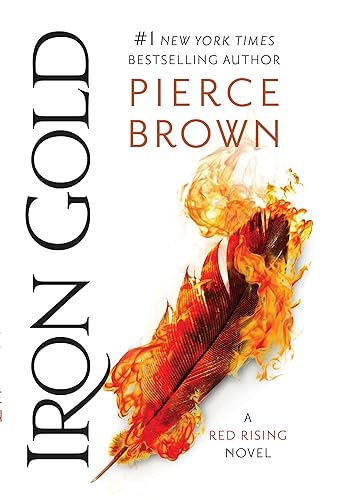
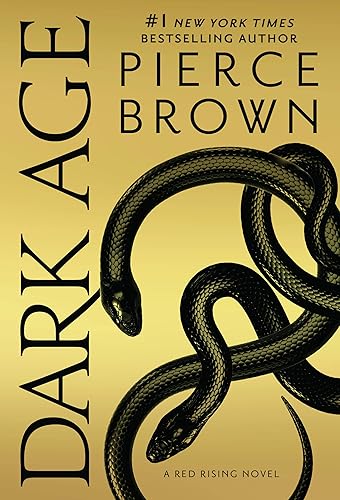
Scope first: I listened to the GraphicAudio dramatized adaptations of books one through three, which resolve Darrow's main storyline, and I started book four before stopping. So this is a verdict on the original trilogy as adapted, from someone who went in on the strength of universal acclaim. The book list below includes the Iron Gold and Dark Age adaptations for completeness; the verdict covers books one through three only.
Get the dramatization
Whatever else I say below, get this part right: if you listen to Red Rising, listen to the dramatized adaptation. It's hard to describe what the production adds because it isn't one thing. It's the voice cast, the music chosen for every setting, the sound design, all of it stacked into something genuinely immersive, and the adaptation's tightening actually moves the story faster than the source books. The proof came when a friend and I, both current on the dramatizations, tried the standard audiobook of book four. We both quit. Going from the full production back to a single narrator felt slower and wordier, like watching a movie and then being handed the novelization.
Book one is everything
The setup: centuries from now, humanity has colonized the Solar System, and society is locked into a color-coded caste system with genetically sculpted roles, Golds ruling at the top. Darrow is a Red, the bottom of the ladder, a miner beneath the surface of Mars who believes his people's sacrifice is preparing the planet for everyone else. What's actually happening to the Reds, and what it costs Darrow personally, launches him into the machinery of the Sons of Ares, who rebuild him into something that can pass as a Gold and infiltrate the elite's brutal Institute from the inside.
Book one is as good as this genre of story gets. The origin is fast and dense in the best way; every page does so much heavy lifting that you know this man completely within a handful of chapters, and you're on the adventure long before the 25% mark where lesser books are still clearing their throat. The academy arc that follows is spectacular. Darrow has that main-character energy you can't help rooting for, operating in a narrow lane, raw physicality and a way of fighting no polished noble has ever trained against, and watching him be the tip of the spear in that lane is deeply satisfying. If I graded book one alone, it sits comfortably in the S tiers.
The banquet is the peak
Book two keeps it going for a while. Darrow is entrenched in high society now, dealing with the waves he made, and the midpoint delivers the banquet duel, the best scene in the series and one of the best duels I've listened to anywhere. Sword dueling is how the Golds measure each other, the razor is their signature weapon, and Darrow, who wields his like the scythe he swung in his first life, gets his moment to show exactly how good he is. It's brilliant. It pays off every hour you've invested.
What do they say, Icarus flew too close to the sun? The higher you climb, the farther you fall? Some analogy like that. The banquet is the highest point Darrow will ever reach, and I mean that literally: for the remainder of the trilogy, the character you fell in love with is never that person again.
The author does Darrow dirty
Late in book two, Darrow is imprisoned, tortured, starved, and physically destroyed over a long captivity. He escapes; that's not a spoiler, there would be no book three otherwise. But he is never the same, and the series makes sure you feel it in every scene. His reflexes are slower. His body is diminished. Everyone else kept training while he rotted. The man whose identity is the Reaper, whose whole lane is being an unprecedented force with a razor in his hand, spends the rest of the series as, explicitly, the weakest fighter in his own crew, the one his friends bail out, sometimes at the cost of their lives. In the final showdown of the trilogy he participates by managing to stay alive.
If you have never listened to a story from the perspective of the weakest member of the party, the one who keeps needing rescue, Red Rising will give you that experience with the character you least want it attached to, and I am telling you, it produces a specific kind of rage I have never gotten from a book before. I turned it off multiple times. I finished it only because friends swore the ending ties together, and it does; that's not the same as it being worth the anger. The author chose realism over audience enjoyment, and I understand the choice, and some listeners plainly love it. I signed up for a war hero's story and got a war story where the hero takes a career-ending injury in act two.
And here's the part that keeps it from even feeling earned: this is a setting with medical technology so advanced that book one rebuilds Darrow nearly cell by cell to pass him off as a Gold. The same civilization apparently cannot rehabilitate a tortured prisoner in less than the years it takes for every rival to lap him. The realism that ruins the character is selectively applied, and that makes it feel less like consequence and more like a contrived handicap.
We don't have an award on this site for a great main character being done dirty by his own author. Whatever we end up calling that award, Darrow wins it retroactively and, I suspect, permanently.
The Jackal, and the rest of book three
Now the fairness the series has earned. The Jackal is one of the best villains I have ever listened to, full stop, and probably the best character in the series. He's not a misunderstood bad guy; he's twisted all the way through in a way that still makes complete sense, the way the Joker works when he's written right, and every scene with him is compelling. If you love a great villain, he alone is a reason to hear this story. Sevro, meanwhile, is the consistency Darrow never gets: an excellent supporting character in book one who is still exactly that character in book three. The supporting cast in general is strong, and when some of them die, it's because this is a war with real stakes, not shock-value culling.
Book three still frustrated me structurally. A huge stretch is spent on a side quest recruiting the Obsidians, the caste of engineered war-slaves kept in enforced primitive worship of the Golds. Interesting concept, and the one Obsidian in Darrow's crew is a great character; but the recruitment arc introduces a queen who exists purely to make the plot math work, spends hours on a culture that then contributes nothing but troop numbers, and could be cut without changing the story at all. In the finale of a tight trilogy, that's an expensive detour. The ending itself is cohesive and closes what it opened. I respect it. I didn't enjoy getting there.
Verdict
Not Worth the Credit. C-peak. C because I stopped, which on this site is what C means: I tried book four and set the series down. Peak because almost everything except my enjoyment is operating at an S level, the prose, the production, the villain, and a book one I'd recommend to nearly anyone with the warning to consider stopping while they're in love. My grading methodology measures whether the hours rewarded me, and from the banquet onward they mostly made me angry.
The fairness triple, because this series absolutely deserves it: the craft is exceptional; there is a real audience for realism-forward war stories who will call this a masterpiece, and I had dinner with a friend who gushed about it for an hour while my critiques bounced off him; and if you attach to supporting casts rather than protagonists, every complaint I've made loses most of its force. Not every book is for everyone, and the acclaim isn't wrong about the quality. It's just answering a different question than the one I ask, which is whether I was glad to press play.
The door isn't fully closed. Iron Gold's dramatization is out and book four shifts focus beyond Darrow; my friend is going in first, knowing all my complaints. If his report is good, maybe I go back. Time will tell.
Reading order
Books in publication order. Cover links go to Amazon, affiliate-tagged, so you get the book and I get a small cut.


If you liked this, try…
- A Song of Ice and Fire — the other mainstream giant on this shelf; to be clear, Red Rising is not that situation: when this series kills someone, it's because war has stakes, not because the author needed a shock
- Solo Leveling — the opposite contract with the listener: the tip-of-the-spear protagonist who stays the tip of the spear; if watching the hero be great is why you listen, that promise gets kept there and broken here
- Defiance of the Fall — the instructive contrast in what carries a story: Zac is a generic lead surrounded by a cast that elevates him, while Darrow IS the story, which is exactly why breaking him breaks the series
Content notes
War violence, torture, execution, and body mutilation, handled seriously rather than gratuitously. The heaviest content on this site's sci-fi shelf; the dramatization's sound design makes it land harder.
Frequently asked questions
Dramatized adaptation or the regular audiobooks?
How is this C-peak when the review calls the writing S-tier?
This isn't LitRPG. Why is it on the site?
How far do the dramatizations go?
Read next
Worth the Credit verdicts (B-tier and above). Scroll the carousel for more.