LitRPG
The Bad Guys Review: Six Good Books and One Unforgivable Reset
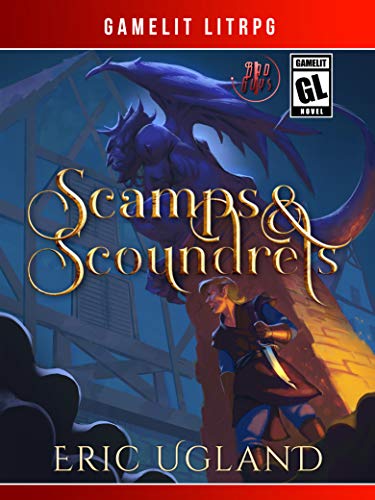
The frustrating part of Eric Ugland's catalog is that he proved he could do it.
The early Bad Guys books are good, and I would have told you so at the time without hedging. They are also the most directional writing in Ugland's catalog: once the first couple of volumes get going, these books are plot-heavy in a way The Good Guys never manages, and they are actually going somewhere. A clever rogue with death-magic leanings, Clyde Hatchett, works the den-of-thieves intrigue of Glaton, the imperial capital. He is a planner. His decisions make sense and follow from what he knows. He has none of the problems that make The Good Guys hard going. Through five or six books this is clearly the superior series, and it is the only stretch of Ugland's shared world I would put in front of somebody.
Then, around book seven, the author appears to have decided his character had grown too strong.
The tjene, and what the series does with a good idea
Before the reset, here is the thing that shows both what Ugland can do and what he does with it.
The world has a legal market in people. If you have a marketable skill and you are desperate, you can sell yourself to a guild for life, and in exchange you receive a lump sum equal to what you would have earned practicing that skill across a normal career. The money is yours to place: set up your children, clear a debt, provide for a family you are leaving behind. Once you take it you are owned. These people are called tjene.
What makes it more than set dressing is the market logic. A high-level adventurer who has fallen on hard times is worth an enormous amount to a low-level buyer, because the binding is absolute. A level ten character can own a level hundred protector and never once worry about the power gap between them, which is the only circumstance in which that gap is comfortable rather than terrifying.
That is a properly good idea. It has economics, it has desperation, it has a moral problem sitting right in the middle of it. Clyde ends up with tjene of his own, not by choice, and he is visibly uncomfortable owning people. The books do not pretend that discomfort away.
And the tjene themselves are written well. They arrive with real backstories, because you do not sell your life without a reason, and the reasons are specific and sad and interesting.
Do not get attached.
They are killed off, one after another, protecting Clyde, and the manner of it is the part I cannot let go.
Mornax the Destroyer is a minotaur, one of Clyde's tjene, and exactly the kind of character you build a party around. He dies in a dungeon during the errand to purge the necromancer class. The party walks into a trap room. A sleep effect takes hold, and Mornax settles into a cushioned chair, and the chair begins absorbing him. By the time Clyde shakes off the spell and reaches him, he has sunk in too far to pull out, like quicksand. Then he is gone. Eaten by furniture, asleep, having neither fought nor saved anybody nor bought the party a second of time.
I spent the next stretch of the book waiting for the reversal, because surely that is a fake-out. It is not. They kill the chair, confirm he was consumed, and move on, and the sentiment offered is that he knew what he was getting into when he entered the dungeon. He is not mentioned again after the dungeon.
That is the death of a character called the Destroyer, and it carries no weight, changes nothing, and costs nobody anything. Another of them was a woman from a fleet so large it counted as a nation, which is a premise you could hang a book on. She lasted about as long.
So the sequence is: build a good institution, populate it with people worth caring about, give the protagonist a moral bind he cannot escape, and then spend all of it as protection detail. A fair amount of page time across these books goes to introducing somebody and then killing them shortly after.
If those deaths landed, I would defend them. Killing characters is not a flaw, and a series where nobody dies has no stakes. The complaint is that these deaths do not mean anything. Nobody grieves for long, nothing changes course, and no later book is different for them having existed. The idea was good and the characters were good, and neither survived contact with a plot that needed bodies more than it needed consequences.
The cardinal sin
What follows is a full power reset, which is the structural failure I hold above almost every other. Abilities corrupted. Fix mandatory. Powers surrendered. New class.
I want to separate two complaints here, because they are not the same size.
The first is the reset itself, and on its own I could have lived with it. Authors write themselves into power problems and sometimes the honest fix is ugly. Fine.
What makes it indefensible is that the errand leaves nothing behind. Work out what actually persists from those three books once Clyde is home, and the answer is a subtraction: he no longer has the most powerful and interesting abilities he had at book six. That is the net result. Not a relationship, not a faction, not a piece of knowledge that pays off later, and not a replacement kit worth having. Three books to remove something.
The second is what the reset is used to justify, and this is the aggravating masterstroke: a three-book side quest, away from the capital, away from the intrigue, away from every faction and relationship the series had spent six books building. The thing that made The Bad Guys work was never the power set. It was the city, the scheming, and a protagonist smart enough to be interesting inside it. The reset is the mechanism that removes all three.
And neither half of the trade is interesting. The replacement power set is a lateral move into duller tools, and the quest itself is not compelling on its own terms either. It is not a bad adventure badly told. It is a pointless one competently told, which is the specific failure that runs through this whole shared world: the pages are fine and they are not buying anything.
So here is the most useful thing I can tell you, stated as carefully as I can. Books one through six are the buy. Books seven through nine are the errand, and I would skip them if I were doing it again. From book ten Clyde is back in Glaton and the main plotline is back where the series works.
I am not recommending book ten. I did not read it, and I will not tell you a book is worth a credit on the strength of a blurb. If you want to roll the dice on the back half, the only thing I can offer is that the setting problem is fixed by then. Whether the writing recovered with it, somebody else will have to tell you.
Here is how it actually ended for me, and it is worse than quitting in disgust. Clyde gets back to Glaton at the very end of book nine, which was everything published at the time. So I did get the homecoming. That was the payoff the whole detour had been promising, and it should have left me impatient for book ten.
Then book ten came out and I looked at it and realized I did not care. The series did not lose me with a bad book. It lost me on the return, which is the worst place it could have happened, because the return was supposed to be the reward. Three books of errand had already spent it.
Two things were working on me by then. One was the shape of the wider catalog, which I had watched not go anywhere across two other series. The other was simpler and more personal: I signed up for a necromancer thief and by book ten I just had a thief. Book eleven has since arrived and I have not picked that up either.
That is the whole failure in one sentence: the books did not become bad, they became irrelevant to me, which is worse and harder to come back from.
The convergence
Across the last books I heard, something else sets in, and it is the problem that eventually ended my run with Ugland altogether.
The two flagship protagonists start sounding like the same person. The smart one begins making dumb choices. The dumb one goes conveniently smart when a scene calls for it. Two leads from two supposedly distinct series, in two different corners of a shared world, converge until the reliable way to tell them apart is hygiene.
That is not a crossover. It is an author with one voice writing two names.
Where it lands
C-high. That is a real grade and I want to defend both halves of it.
The "high" is the first six books, which are good, and I am not going to pretend otherwise because the back half disappointed me. If you buy books one through six, read them, and stop, you will have had a good time and I will have given you accurate advice.
The "C" is everything after, because the ending is part of the series. I apply that to series I love and I have to apply it here. Four books spent dismantling the thing that worked, followed by a protagonist who stops being distinct, is not a run I can recommend as a whole.
Buy the first six. Stop when he leaves the city. That is the narrow window where Ugland is worth your credits, and it is a genuinely good one.
Verdict
Not Worth the Credit as a series, which is not the same as saying do not read any of it. The early run is the exception in this catalog, and the shared-world piece explains why the rest of it never arrives.
Reading order
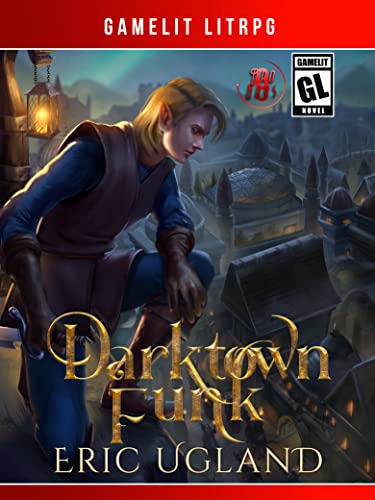
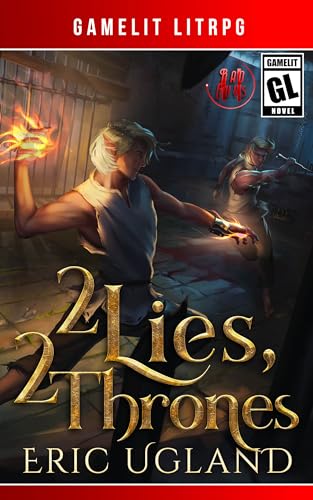
Books in publication order. Cover links go to Amazon, affiliate-tagged, so you get the book and I get a small cut.



Content notes
Assassination, criminal underworld violence, and death magic. A central plot element is a legal system of lifetime indenture, which the text treats as slavery and which the protagonist participates in with open discomfort. Darker in register than The Good Guys without being explicit.
Frequently asked questions
Which Ugland series should I try if I only try one?
What is the tjene system?
Does the tjene material pay off?
What is the cardinal sin?
Should I skip the side quest and rejoin at book ten?
Why does the reset hurt more here than elsewhere?
Does it recover after he returns?
If the early books are that good, why is this not a higher tier?
Read next
Worth the Credit verdicts (B-tier and above). Scroll the carousel for more.