Progression Fantasy
Mother of Learning Review (Through Book 3): The Time-Loop Classic, and Its One Bad Habit

Spoiler scope: safe through book one's setup until the marked break, which goes into one book three moment.
Where I am
I'm three books into Mother of Learning, the four-book time-loop classic, and I'd planned to wait until the end to review it. Then The Stubborn Skill-Grinder book five dropped, I took a break to listen to it, and going back and forth between the two time-loop series made both of them clearer to me. So here's where I am, and I'll update this once I finish book four.
Books one and two are excellent
Book one is really good. The pace isn't as frenetic as Skill-Grinder's, a bit more relaxed than I'd have preferred, but there's clear progression, and it's interesting watching Zorian Kazinski adapt to the loops: what he chooses to focus on, and how he goes after real depth in his growth. Zorian is also a fun contrast with Skill-Grinder's lead. Instead of Orodan, you're following a combat-averse character who is more intelligent and methodical about everything.
In book one he's mostly an introvert with some anger issues, and he's forced to start interacting with his classmates at the academy, more because he's trying to understand what's happening to him than out of any interest. You get to know his whole class, and they all have their own stories. In book two his improved power, academics and social skills change how he functions at school; in book one he's a good student, by book two he's essentially a genius next to his classmates. It's as good as book one, a little slower in parts, and it keeps expanding the world, raising the stakes, and filling in the larger plot.
The best part of both books, for me, is the revisiting. As the world expands, you watch Zorian go back to the same people and places and get a completely different experience out of them depending on what he's chosen and what he's learned. There are almost butterfly effects, where a small change has an outsized impact on a character. And there's his broken family: people with their own baggage who never resolve their conflicts because they can't get past their egos to see each other's point of view. As Zorian lives through more loops, his personality changes. He starts out standoffish and self-focused to the point of being abrasive and hurtful, the loops temper him, and as he leans into empathy he gains real insight into his family's feelings. The author writes those dynamics really well.
My favorite single stretch is from book two. Zorian tries to lay low for a loop to get some downtime for research, and takes a very minor job for a merchant in a small town, feuding with a small-town competitor. It turns out to be harder than it should be, and he doesn't stop to wonder why, because a place that out of the way couldn't possibly have any political intrigue. It does. The competitor is being backed by a serious player, he's stumbled into an important piece of the larger puzzle, and watching him set out to trap a mouse and find a bear is great.
Book three's bad habit
Book three really fell off for me. I had to stop multiple times and go listen to something else because I got bored. I never skipped any of it, it's never so bad that I felt I could, but about half the book is great and half is a slog.
The problem is the same thing that's actually a strength in Skill-Grinder: the main character ends up needing a huge variety of skills. Mother of Learning spends far too much time in the nitty-gritty of Zorian researching, developing, and then explaining how and why each one works, plus how other kingdoms approach them and their history. With a couple of core skills that would be fine. With this many, the exposition gets out of control, and then he goes on an adventure that uses a pile of those skills, and you sit through the setup and the objectives after already sitting through the theory. At the point where the plot is coming to a head, you don't want an hour of magic theory about how some magical process works just so he can bypass the wards somewhere.
It's inconsistent, too. Golem-making gets maybe an hour and a few chapters to cover the core mechanics, and after that you just see his golems get better, with mentions of the big jumps, sometimes credited to his old classmates. That's exactly right, and golems become a big part of his combat strength. Other skills get a granular, slow, frustrating progression that's completely unnecessary.
The aranea, the telepathic spider people, are the same story. They're an interesting alliance, and the way he builds that connection over different loops is good for the story overall. There's just so much time spent on them in books two and three that half the time would have been a lot more rewarding.
Fetch quests, and what they cost
Book three also turns into a quest for five key items, and most of them are a long fetch quest. One goes to a far-off kingdom of giant insects that's introduced and resolved inside the same book: the exposition about getting there, who the race is, their history, why they have the thing, all the planning. It eats a fifth to a quarter of the book. They get the item within a couple of tries, because they need five of them and the series is running out of time, so you know they will. And then none of it matters again, because the bugs were only ever there to guard the thing. It isn't badly written. It's bad execution.
What it costs is the stuff the author does best. The recurring characters are one of the strengths of this series: good guys, bad guys, politicians, all the players, and how the way Zorian deals with them changes as he gets stronger. In book one, an archmage is an instant death threat to be avoided at all costs. By book three they're on par with archmages, so suddenly they can bargain, trade, buy services, actually fight, and learn what that character really wants instead of guessing from his actions. That's great. Meanwhile his classmates, who were so interesting in books one and two, have become nearly irrelevant by book three; he has clones going to class for him. Taiven, who's closer to him, sticks around, and a classmate or two gets a few scant chapters because Zorian's heading to their part of the world. And the family threads, the thing I'd most like to see more of, get skipped or shortened in favor of more mechanical process. It's the classic middle-book problem: book three exists to load you up with the information, plot points and skills Zorian and Zach need to set off book four.
The heist (spoilers, Book 3)
Stop here if you haven't finished book three.
Here's the other half of book three, and it's why this is still an A. The capital's vault has been a focal point since book one, when Zach first tries to assault it, and it keeps coming up. By book three, they make the most progress on it by reaching a truce with their greatest enemy for a heist. You would never have imagined that from book one. It's almost absurd, and it's awesome, and it's exactly what makes the time loop and the story's progression excellent. I'd have been fine with it running longer. Put that right next to the trip to the insect kingdom and you have book three in a nutshell.
Verdict
Worth the credit, A-mid, through book three. Everything about this series is very well done: the writing, Jack Voraces's narration, the production. I don't like assigning grades right after an installment I didn't enjoy, and I don't want to be overly harsh because book three had some really slow parts. Books one and two are excellent.
It's all riding on book four now. I'm going into it much further from the end than I expected, with key pieces still to get, the final battle to resolve, the questions about the primordials still open, and the family threads I'm hoping the author returns to. Book three makes me a little nervous about how much of that gets the screen time it deserves. But Mother of Learning has a long, strong recommendation history, and I haven't seen complaints about the ending, so fingers crossed. Depending on how it lands, this could easily move up to A-high or A-peak.
Reading order
Books in publication order. Cover links go to Amazon, affiliate-tagged, so you get the book and I get a small cut.


If you liked this, try…
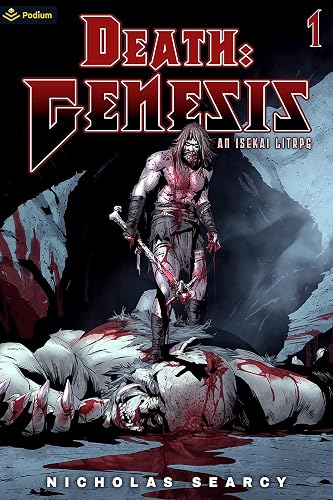
- The Stubborn Skill-Grinder in a Time Loop (X-RHODEN-X) — the newer time-loop series, faster and leaner, and the one that knows when to summarize a skill and move on
Content notes
Violence and death within the loops, a looming invasion, and a family with real emotional damage. Nothing graphic by genre standards.
Frequently asked questions
What is Mother of Learning about?
Is the series finished?
How does it compare to The Stubborn Skill-Grinder?
Is the narration good?
Read next
Worth the Credit verdicts (B-tier and above). Scroll the carousel for more.