Isekai
The Eminence in Shadow Review: Watch the Anime Instead
What this series is
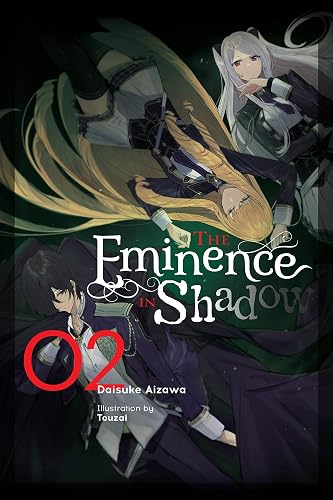
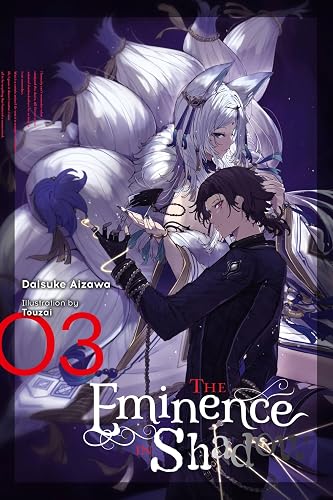
The Eminence in Shadow originated as a web novel by Daisuke Aizawa, eventually adapted into a light novel series published by Yen Audio in English and, more visibly, into a two-season anime by Studio Nexus. The anime is widely regarded as one of the better isekai productions of recent years: sharp action, enthusiastic production, and a funny central gimmick. It generates clips.
The gimmick: Cid Kagenou grew up in modern Japan obsessed not with being a hero or a villain but with being the shadowy power behind them: the eminence in shadow, the unseen mastermind who pulls strings while everyone else takes the bows. He spent his previous life convinced that magic was real if he could only find a way to unlock it. He was right. His method was less distinguished: trying to force open whatever power he sensed inside himself, he slammed his head into a tree repeatedly and died. Reincarnated into a fantasy world that does have magic, he recruits followers for a secret organization he invents wholesale, Shadow Garden, and fabricates an elaborate backstory about an ancient evil cult they're fighting. The joke, maintained across the entire series, is that the cult he made up turns out to be real, the women he randomly recruited have true trauma connected to it, and everyone around Cid is operating inside an actual conspiracy while he remains happily oblivious, playing out the role he scripted for himself as a bit.
The premise meets the execution
Cid is a Mary Sue protagonist without apology: the strongest character in the story by a wide margin, better than everyone at everything he applies himself to, and the series never pretends otherwise. That's the point. The comedy derives from the gap between what the world understands about him and what he actually is: the bit is that he wants to be an unseen puppet master, not a recognized hero, and so he performs conspicuous modesty while being absolutely, comprehensively dominant.
Alpha, his first and most developed follower, provides the closest thing to a authentic emotional anchor for the series. She gets real backstory, real motivation, and actual development relative to the rest of the cast. Delta gets some moments. The wider Shadow Garden roster accumulates quickly and somewhat abruptly; the series doesn't linger on how Cid came to have this particular entourage, and the anime glosses over it with the same speed the books do. When an overpowered protagonist randomly drops fragments of knowledge from the modern world and has an outsized impact on this new one, the series acknowledges the absurdity rather than trying to justify it, which is the correct call.
The gimmick is, to be clear, amusing. The comedic premise (the man performing the fantasy of being a shadowy mastermind actually is one) has real charm. The anime makes it work. The question this review is here to answer is whether the audiobooks make it work. They don't.
The discovery
I came to the audiobooks expecting the same experience I'd had with Overlord and Solo Leveling: light novel series that the anime had compressed significantly, losing character depth and story context that the source contained at greater length. The expectation was that the books would fill in what the anime had rushed past, explain what felt underexplained, and add texture to characters who felt thin in the animated version.
That expectation was wrong in every direction.
The writing quality is poor. This isn't the translation roughness that affects other Yen Audio light novel series: the sentence-level stiffness and occasional awkward phrasing that come with any translated work. The Eminence in Shadow's light novels read like a high school student's first writing exercise. The prose is thin where it should have weight. Events that should land with consequence are rendered with the brisk indifference of a plot summary. The reincarnation setup (Cid dying by tree, waking in a new body in a new world) is treated as an inconvenience to be moved past rather than something worth spending words on. The world logic goes unexplained not because the series saves it for later but because the series doesn't seem to notice it needed explaining.
What makes this discovery particularly jarring is that the anime doesn't actually cut much. By the time I stopped, roughly halfway through the first volume, virtually everything that had happened in the book had appeared in the anime. Certain events are sequenced or framed differently between the light novel and the adaptation, and in most of those cases the anime's choices landed better. The things that felt confusing in the anime (underdeveloped motivations, abrupt relationship formations, world logic that goes unexplained) are not confusing because the adaptation skipped the explanation. They're confusing because the source material is also confusing, only written worse.
The anime vs. the books
The anime's advantages over the source material here are specific and tangible.
The fight choreography and animation are exceptional. Studio Nexus understood exactly what kind of show they were making: one where a completely overpowered protagonist needs to look operatically, incomprehensibly dominant while still being entertaining to watch, and where the fights are the selling point. The animation team delivered sequences that get clipped and circulated precisely because they rendered what the premise demands. Prose cannot replicate this, and Aizawa's prose doesn't try hard enough to compensate.
More significantly, the anime's editing actively improves what the books present loosely. Pacing choices that look like compression, when held against the source, turn out to be improvements. The anime isn't cutting the good parts; in many cases, the anime is the good parts, extracted from material that didn't know how to present them. The rhythm of the comedy, the way Cid's followers are established, the pacing of the reveals: all of these land better in the animated version than in the text.
The comparison to Overlord and Solo Leveling is the right frame for understanding why this matters. Both of those series have anime adaptations that are enjoyable but function as abbreviated highlights of richer source material. Watching Overlord and going to the books gives you more Nazarick, more NPC depth, more of the political complexity the anime had to compress. Watching Solo Leveling and going to the books gives you the extended self-discovery period, the full secondary cast, the texture the anime traded for speed. In both cases, the anime condenses clear substance that exists in the books at length.
Going to The Eminence in Shadow books after the anime gives you the same events rendered in worse prose with less context than the adaptation provided. The depth isn't in the source waiting to be found. It isn't there.
The verdict
D tier. The anime is worth watching if the premise appeals to you. Two or three episodes will tell you whether the gimmick lands. The fights are exceptional, the comedy has real charm, and a protagonist whose actual power level operates miles above what even the people who trust him understand is a comedic premise with real potential. The show delivers on that potential, especially with high-quality animation behind it. Give it a try; you'll know quickly whether it's for you.
The audiobooks are not worth your time or your credit. They don't add to the anime. They don't explain what the anime left confusing. They present the same events in inferior form, and stopping before the first volume ends is the correct call.
If you watched The Eminence in Shadow and want to find isekai that actually works in audiobook form, start with Solo Leveling. That's the version of the overpowered-protagonist experience where the power fantasy is in the writing, not only in the animation. For something with a darker, morally complicated take on a villain protagonist in a fantasy world, Overlord is the recommendation. Both reward the time the source books for this series doesn't.
Not Worth the Credit. Watch the anime.
Reviewed through approximately half of Vol. 1. Audiobook series published by Yen Audio, narrated by Eddy Lee. Anime Seasons 1–2 available on Crunchyroll.
Reading order
Books in publication order. Cover links go to Amazon, affiliate-tagged, so you get the book and we get a small cut.
If you liked this, try…
- Solo Leveling — the overpowered-protagonist isekai that works in audiobook form; the power fantasy is in the writing, not only in the animation
- Overlord — darker, morally complex villain-protagonist fantasy; source material meaningfully richer than the anime
Content notes
Action violence throughout. Shadow Garden character designs lean into fanservice aesthetics. Nothing explicit.
Frequently asked questions
Should I just watch the anime instead?
Is this comparable to Overlord or Solo Leveling in audiobook form?
Why D tier?
Is the MC as overpowered as everyone says?
Read next
Worth the Credit verdicts (B-tier and above). Scroll the carousel for more.