LitRPG
Road to Mastery Review: Thirty Hours in DotF's Shadow
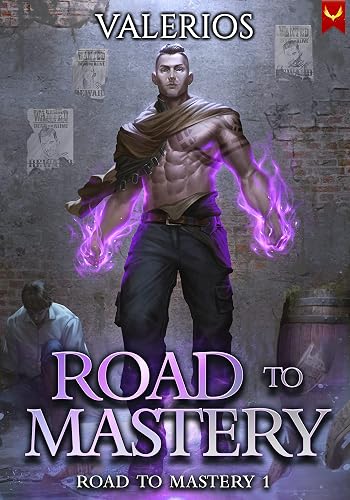
- Narrator
- Jeremy Frazier
- Series
- Road to Mastery — Book 1
- Runtime
- 30h 6m
- Tropes
- system apocalypse, fist fighter MC, Earth-based, dungeon origin, hometown reclamation, martial arts bruiser
- Sub-genre
- LitRPG
- Publisher
- Aethon Audio
The thesis up front
For thirty hours, I felt like I was listening to a worse version of a series I'd already heard. That's not a framing; it's the actual experience of book one of Road to Mastery. The setup is Defiance of the Fall. The beats are Defiance of the Fall. The secondary cast template is Defiance of the Fall. The problem is that Road to Mastery is not Defiance of the Fall, and the gap between what Valerios was clearly building toward and how well it's executed is the entire review.
This rating is based on book one only. I didn't go further.
What this series is
System apocalypse on Earth. An alien AI calling itself the System invades, rewrites the rules of reality, and leaves humanity scrambling for survival in a world that has turned suddenly hostile and hierarchical. Jack Rust, a disillusioned biologist most of the way through a PhD he never finished, finds himself spawned into a forest dungeon with a goblin in his face and nothing in his character sheet but his fists.
The first third of book one is his dungeon origin: stuck underground, fighting his way through enemies, leveling up through combat, acquiring abilities, getting strong enough to eventually leave. It's fine. It doesn't drag unnecessarily, and that's worth something. The back two-thirds follows Jack back to his hometown, where villain factions have moved in during the chaos of Earth's integration, and he has to clear them out.
Coming off Mark of the Fool, a much slower-paced story with writing quality that punches well above what the genre usually delivers, the drop here was significant enough to notice immediately. Road to Mastery is readable. It is noticeably less well-written than most of the LitRPG we cover.
The Defiance of the Fall problem
Defiance of the Fall is a system apocalypse LitRPG in which Zach, the protagonist, gets caught in a dungeon during Earth's system integration, levels up fighting his way out, and then spends the rest of book one clearing out the people who have seized control in the chaos. Zach is a physical fighter: an axe-wielder rather than a fist-fighter, but the function is the same. He has family he's desperately trying to protect. He picks up a secondary character who started in the villain camp under duress and switches sides when given the opening. His supporting cast becomes one of the real strengths of the series as it develops.
Road to Mastery traces that same outline.
Not in the broad-strokes way that all system apocalypse LitRPG inevitably share DNA: in the specific, structural, beat-for-beat way. System apocalypse setup: same. Protagonist caught in a dungeon during Earth's integration: same. Leveling through combat, relying on physical force instead of magic: same. Returns from the dungeon to reclaim his area from an entrenched villain faction: same. Secondary character who starts working for the villains and defects when given the opportunity: same. The entire shape of book one maps onto book one of Defiance of the Fall.
The question is whether Road to Mastery does any of this better. It doesn't.
Defiance of the Fall is S-mid. Road to Mastery is C-low. That's the distance between the blueprint and this building.
The character problem
Zach from Defiance of the Fall is not a deep character. He's an everyman protagonist whose main function is to give you a grounded human perspective on the LitRPG multiverse Brink is building. What he has is clarity of motivation: protect his family, protect his sister, and that motivation does real structural work throughout book one. It gives you a reason to root for him even when his personality isn't the draw.
Jack Rust is blander than Zach. Stating that plainly matters because Zach is not a high bar for characterization; being less interesting than him is a meaningful failure, not a minor one.
Jack functions. He does his job in the story. But he doesn't have the motivational anchor that makes Zach at least readable, and he doesn't have a secondary cast around him to compensate for what the main character lacks. The supporting characters in book one feel like roles filled rather than people: they're positioned in the narrative to keep the plot moving, and they have just enough interiority to do that and no more.
The most symptomatic case is the story's second-most significant character: a member of the villain faction who didn't want to be there, stayed in the background as long as possible, and switched sides when the opportunity came. In Defiance of the Fall, there's a comparable figure: a character named Agras, someone who starts in a morally compromised position for reasons that make sense, and whose allegiance shift you've been set up to care about. Agras works. The equivalent in Road to Mastery is the same archetype with less setup and less consequence, and it reads exactly the way you'd expect that to read: the moment arrives, the character switches sides, you feel nothing much about it.
The problem isn't that Road to Mastery invented a bad version of this character. The problem is that it didn't do the work to make the character matter before asking you to care about the payoff.
What isn't bad
The dungeon section is exactly as long as it needs to be. A significant percentage of LitRPG origin sequences run twice as long as their content can support; this one doesn't. That's a real positive, and it gets the credit it deserves.
The pacing overall is acceptable. Nothing drags egregiously. The writing is functional. These are honest observations, not faint praise being deployed to soften what follows. They're just not enough to move the needle.
Road to Mastery has an audience and a fan base that clearly gets something from it. Later books in the series carry significantly stronger ratings, and the series appears to grow more confident once it moves away from the Earth-based opening arc into space-opera territory in book two and beyond. It's entirely possible the series earns something later that book one doesn't deliver. I didn't find out.
The verdict
C-low. Not Worth the Credit.
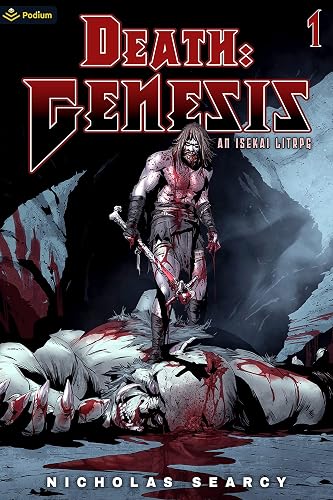
Thirty hours of feeling like you're listening to a worse version of a series you already know is its own kind of exhausting. The pacing was fine. The dungeon section didn't overstay its welcome. But book one of Road to Mastery gives you no reason to prefer it over Defiance of the Fall, which covers the same setup with meaningfully better character work, stronger protagonist motivations, and a secondary cast that actually earns your attention. Death: Genesis is also a relevant comparison: same bruiser-protagonist-in-a-dungeon archetype, different world, and a meaningfully better execution of the type.
If this is the kind of story you want, Defiance of the Fall is right there. If you've done DotF and want more of the same shape, Death: Genesis is a better use of your time. Road to Mastery is the third-best version of a story the genre has already told better.
The only thing I reliably enjoyed about book one was that when it ended, it was over.
Reading order
Books in publication order. Cover links go to Amazon, affiliate-tagged, so you get the book and we get a small cut.
If you liked this, try…
- Defiance of the Fall by JF Brink — the series this book is modeled after. Same setup, better protagonist motivation, stronger secondary cast, payoff that actually lands. S-mid; read this instead.
- Death: Genesis by Nicholas Searcy — a bruiser protagonist soloing through a dungeon, not Earth-based, same archetype and considerably better at it. B-high; also a better use of your time.
Content notes
Violence throughout, including dungeon combat and armed conflict.
Frequently asked questions
Does the series improve after book one?
How is it structurally different from Defiance of the Fall?
It has a fan base and strong later ratings — what am I missing?
Read next
Worth the Credit verdicts (B-tier and above). Scroll the carousel for more.