Multi-Series Review
The Good Guys, The Bad Guys, The Grim Guys: Eric Ugland's Shared World Reviewed
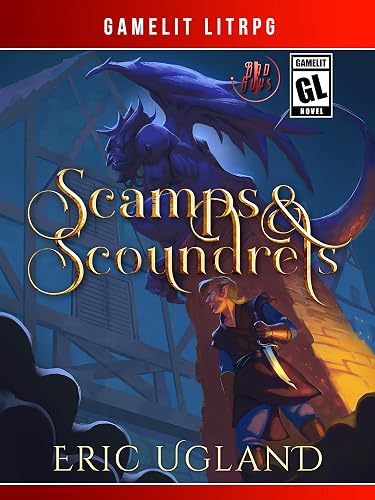
Twenty-three books across three series in the same shared world — The Good Guys, The Bad Guys, and The Grim Guys. After putting in the listening hours, here's the honest case for skipping most of it and the narrow window where Ugland is genuinely worth your time.
Why this exists
Eric Ugland is one of the most prolific authors in the LitRPG genre — 49 published books at last count, three of them anchoring a shared fantasy world that has built a loyal, vocal fanbase across Audible, Reddit, and the LitRPG Facebook group. The catalogue is large enough that any new listener searching the genre will run into it. This review exists because the founder has put in the listening time — about 23 books across the three series — and the honest verdict is that most of those credits could have been spent better.
What follows is the per-series breakdown, the cross-catalogue pattern that explains why all three end up where they end up, and the single narrow window where Ugland is genuinely worth a try.
The shared world
The three series take place in the same setting with different protagonists:
- The Good Guys follows Montana, a tank-class protagonist transplanted into the world of Vuldranni.
- The Bad Guys follows Clyde Hatchett, a charming-and-slightly-crooked rogue / death-magic anti-hero working out of the imperial capital — also in Vuldranni.
- The Grim Guys follows Greg and Julian — frat-bro ghost-hunter podcasters from Earth — transported into Mahrduhm, a different corner of the shared world introduced in Ugland's most recent writing.
Each book in each series hints at connections between the three main characters and an overarching plot tying the world together. Twenty-three books in, those hints have produced almost no actual movement. The setup is the same — bigger story coming, threads converging — and the payoff never materialises. The single most useful framing for what Ugland is doing across the catalogue: a soap opera that gestures at a finale it has no intention of writing.
The Good Guys — D tier
Montana is the single biggest problem with the series, and the problem starts at the character level.
He's presented as an idiot — and not endearing comic-relief stupid. Frustrating stupid. The text repeatedly establishes that he doesn't bathe unless forced to. He's described as routinely covered in blood and gore he makes no effort to clean off. When advisors or companions tell him to handle basic self-care, he acts obstinately childish about it. None of this lands as comedy because the writing isn't structured to land it as comedy — it reads as a character the author finds funny and the reader has to live with.
The deeper problem is that Montana isn't consistently any one thing. He'll be inexplicably cunning in a scene that needs him to be cunning, then immediately back to being dumb in the next scene because the plot needs him to miss something. There's no coherent arc connecting these versions of him. He behaves the way the scene requires, not the way a person would.
The pattern bleeds into the rest of the series. Montana is handed powerful items in book one and immediately loses them. He acquires allies who never come back. He picks up abilities that get used once and forgotten. Across eleven books the accumulation goes in one direction — outward — and the story never compounds the way a long-running progression series needs to compound.
The romance handling is its own complaint. Montana refuses any romantic involvement because of a dead love from his previous life. As a one-book emotional beat that would be fine. As an eleven-book authorial shield against having to actually write romance, it's lazy. Women pursue him anyway — despite the hygiene, despite the behaviour — for political or contrived romantic reasons that don't read as real motivations. The setup feels like it's trying to import anime-style harem dynamics without doing the writing work to make them land.
Verdict: skip the entire series. Not worth the time, not worth the credits, not worth the trial.
The Bad Guys — C tier (early books borderline B)
The best of the three, and the only place Ugland is genuinely worth trying.
The opening books — roughly one through six — work. Clyde Hatchett is a methodical, cunning rogue-and-death-magic type whose decisions actually make sense. He has goals. He pursues them. The imperial capital setting gives Ugland a venue for political intrigue, faction work, and the kind of low-level scheming the rogue archetype is built for. The dialogue is sharper than in The Good Guys. The pacing is tighter. The character work distinguishes Clyde from Montana cleanly.
Then around books seven and eight, Ugland writes the series straight off a cliff. Clyde's powers have grown to a point where the author apparently doesn't know how to keep him interesting. So Ugland strips them. The character loses everything that made him compelling on the page, has to leave the capital — leaving behind the political intrigue and the faction work that were the best parts of the series — and spends three to four books on a side quest to acquire a new, less interesting class.
This is the cardinal sin. Stripping a character of what made him compelling is a craft choice writers sometimes make, but it requires the replacement to be better than what came before. Ugland's replacement is worse. The new class is duller, the new setting is duller, and when Clyde finally returns to the capital, he's a weaker version of who he was in book six, in a setting that's lost three to four books of momentum.
Making matters worse: by the later books, Clyde starts behaving increasingly like Montana. The same inconsistent intelligence. The same scene-by-scene logic gaps. The same "smart when the plot needs it, dumb when it doesn't" pattern. By book eleven, the protagonist who opened the series as a sharp counterweight to The Good Guys has drifted into the same vocal space as the character he was supposed to contrast.
Verdict for The Bad Guys: read books 1 through roughly 6. When Clyde loses his powers and leaves the capital, stop. If you absolutely have to know what happens next, skip the side-quest arc entirely and pick up when he returns to the capital — but expect a weaker character and a less interesting power set on the other side. The early-Bad-Guys window is the one place in the entire shared world we'd point a curious reader at, and even there we'd say borrow it on Kindle Unlimited rather than spend a credit.
The Grim Guys — F tier
Skip outright.
Greg and Julian — frat-bro ghost-hunter podcasters from Earth, transported into the Mahrduhm corner of the shared world — are obvious knockoffs of Erik and Rugrat from Michael Chatfield's The Ten Realms. Same dynamic, same banter, same energy, diluted. The kingdom is new and Ugland does decent worldbuilding work on the cultural texture, but Greg and Julian immediately behave like a blend of Montana and Clyde. Occasionally smart when the plot needs it, obtusely stupid otherwise. The intentionally-misinterpreted-question gag (a tic across Ugland's writing) is played for cheap comedy. Good advice from trusted advisors gets ignored for no character reason. There's no original personality and no fresh dynamic to set this series apart from the other two.
It also adds nothing to the overarching shared-world plot, and based on how Ugland writes the other two series, it never will. The catalogue-wide pattern — hints of bigger story, no actual progression — applies here too, with no reason to believe this is the series where it'll be different.
Verdict: hard pass. Don't even spend the free trial on it.
What goes wrong, across all three
Two patterns are bigger than any single series.
The plots never move. Across roughly 23 books in the same world, the connecting plot has barely advanced. Every book gestures at the bigger story; almost none actually advance it. The bulk of every book is filler — side quests, dungeon dives, monster hunts that don't compound, items acquired and lost, allies met and forgotten. Strip out the filler and you'd have three or four books of real story across what's currently a 30+ book catalogue. The most generous reading is that the books are deliberately structured as comfort-food serial fiction with no intention of finishing the bigger plot. The less generous reading is the same thing without the word "deliberately."
The characters converge. The MC in each series starts distinct and ends up the same voice. The same problem-solving style. The same inconsistent intelligence. The same comic register. By the time you're deep into any of the three series, the protagonist of that series sounds like the protagonist of every other Ugland series. This is the single most damaging craft failure in the catalogue, because it's the one thing readers came for: distinct characters in a shared world. The shared world remains. The distinct characters do not.
What works (giving Ugland his due)
Two things genuinely work.
The worldbuilding. Ugland creates distinct, richly textured cultures and regions. The political-economic detail in the imperial capital, the cultural difference of the kingdom The Grim Guys introduces — these are real strengths and they're the reason the early-Bad-Guys window is genuinely worth a try. The frustration is that the worldbuilding is a vehicle for filler side quests rather than a setting that earns meaningful plot.
The series premises. Each opener does its job. A tank-warrior dropped into a fantasy hierarchy. A rogue rebuilt in an imperial capital. Two adventurers exploring a new corner of the world. The setups are competent and the first-book hooks land. The problem is what happens after the hooks.
The reading guide
If you've decided to try Ugland against your own taste:
- The Good Guys: skip the whole series.
- The Bad Guys: read books 1 through roughly 6. Stop when the main character loses his powers and leaves the capital. If you must continue, skip the 3–4 book side-quest arc and resume when he returns to the capital — but expect diminishing returns.
- The Grim Guys: skip the whole series.
And read the early Bad Guys on Kindle Unlimited, not on an Audible credit. If those first six books work for you and the criticisms above don't track, you've found an author you'll enjoy; come back to spend the credits on the later entries. If the criticisms do track, you've saved yourself ten-plus credits and gotten a calibrated read on whether the rest of the catalogue is for you. (It won't be.)
The verdict
Not Worth the Credit — across all three series, with the narrow early-Bad Guys window as the only meaningful exception. Ugland's fanbase will defend him, and the site exists so a single trusted voice can disagree with the consensus and explain why. This is one of the disagreements we're prepared to defend.
For series we do recommend, see the Best LitRPG Audiobooks for Beginners list. For more series whose reputations outpace their quality, see the Most Overrated LitRPG list. The Bad Guys follows the same shape as the entries on LitRPG Series That Lost Their Way — strong early run, sharp mid-series collapse — but the early-book ceiling (borderline B-tier) doesn't quite clear the top-quartile bar that list uses for entry.
Last reviewed: June 2026 — 23 books across the shared world (~11 of The Good Guys, ~11 of The Bad Guys, 1 of The Grim Guys).