Cultivation
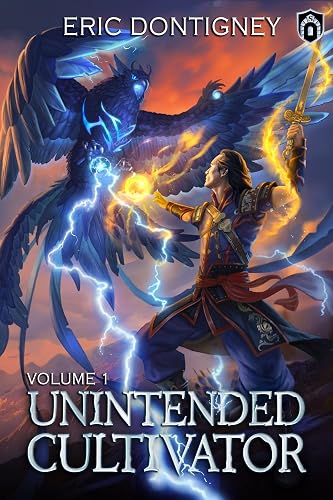
The Unintended Cultivator Review: A Promising Opening, Then an Entire Book of Training
A fast start, and then nothing
Unintended Cultivator kept coming on and off my radar because its fans are vehement, so I finally gave it a shot, and the opening genuinely encouraged me. The setup is classic: ordinary humans below, near-godlike cultivators above, and a wandering cultivator arrives in a small town to choose an apprentice. Every kid in town clamors for his attention; our street-level outcast hides instead, and that, or something the cultivator senses beneath it, gets him picked. Kid chosen, town left behind, all within the opening chapters. A speedy origin is my favorite promise a book can make.
One early scene deserves its own callout for absurdity before we get to the real problem. The kid, street-raised and rightly suspicious, won't go with the cultivator until the man provides for the woman who cares for the town's orphans. Reasonable! Except the negotiation logic runs: modest food and lodging feels suspiciously generous, therefore the winning move is to shower her in gold. If you're suspicious that help is too good to be true, quintupling the help should not close the deal, and nobody in the scene behaves like a person. It's brief, so I moved past it, but it was the first hairline crack.
Book one is a training montage. All of it.
Here's the review in one sentence: I got 90% of the way through book one, and nothing had happened. The fast opening turns out to be a bait-and-switch into the longest training arc I've encountered presented as a novel. He learns to find his mana: chapters. He learns to cultivate: chapters. Martial arts basics: chapters. Each time you clear a milestone and brace for actual story, the master simply produces the next training module. The starter missions, when they finally come, are competence checks with no plot in them, one or two basic monsters, proof he can be trusted outdoors. I started skipping chapters out of boredom, kept encountering more training when I landed, and eventually got tired of skipping and put it down with 10% left. There's a subplot friction with the master's wife that I found incongruent, though in fairness I'd skipped enough by then that I may have missed connective tissue.
Let me be precise about what I'm not saying: the prose is good. Dontigney can clearly write, the dialogue is reasonable, the flow is professional. If any of it had been offensive on top of empty, this would be an F; the craft is what holds it at D. And from what I can find online, the slow, journey-is-the-destination pacing isn't a book-one fluke, it's the series' identity, with the plot as a background element throughout. The fanbase presumably knows this and loves it for exactly that. Different audiences, and this one isn't me: I need training to be in service of a story, and here the training is the story.
Verdict
Not worth the credit. D, and a skip. If the fans have you curious anyway, here's my honest path: book one rotates onto Audible's Plus catalog periodically, but I wouldn't even spend the free listen on it. Read a synopsis of book one instead, it summarizes losslessly, because the character beats are ones you've absorbed from a hundred other street-orphan origins, and start at book two, where I'm told something happens. I can't verify that from experience. I ran out of book before the story arrived.
Reading order
Books in publication order. Cover links go to Amazon, affiliate-tagged, so you get the book and I get a small cut.
If you liked this, try…
Content notes
None notable.
Frequently asked questions
Does it get better in book 2?
The series has a dedicated fan base — is this a style mismatch rather than a failure?
Is there a way to try this without committing a full credit?
Read next
Worth the Credit verdicts (B-tier and above). Scroll the carousel for more.